What 30,000 Chess Games Taught Me About Financial Markets

I’ve lost roughly 14,000 games of chess.
That number comes from ten years and about 30,000 games on Chess.com, where my rating hit a new all-time high this week at 1907; roughly in the top 0.5% of players in Blitz (5 min) and Rapid (10+ min).
I’m nowhere near a titled player, and a strong club player would still take me apart, but somewhere around game 20,000, I noticed something. The habits the board had drilled into me were showing up in how I read markets, sized positions, and handled losing money.
The overlap was too consistent to ignore.
So this Sunday, no vault yields or tokenization pipelines, just 6 lessons from the board and one difference between the two games that I think matters more than all of them combined.
1. Losing is the tuition
The math deserves a second look. I’m in the top half percent of players on the platform, and I’ve still lost nearly half my games. That ratio doesn’t improve much as you climb, because the pool just gets harder.
Markets work the same way.
Every investor you admire has a long ledger of losses, and the good ones treat each entry as paid tuition. Chess.com hands you a game review after every loss, move by move, showing exactly where the evaluation flipped. Your brokerage statement can serve the same function if you let it. The habit that transfers is the review, not the loss itself.
A loss you never study is tuition paid for a class you skipped.
2. A plan beats a feeling
The games that still sting aren’t the ones where I got outplayed.
They’re the ones where I had a prepared line, saw something shiny on move twelve, and abandoned the plan to chase it.
Traders have a phrase for the antidote: plan the trade, trade the plan.
A written plan is a decision made by the calm version of you, handed to the version of you who will be watching a position move against them at 2 PM on a Tuesday. Emotion fills whatever space the plan leaves empty.
In chess, that’s how you hang a queen. In markets, that’s how you buy the top of a squeeze because the candle looked exciting.
3. Ask whether the position is familiar
After enough games, you stop calculating everything from scratch and start recognizing this pawn structure, this piece placement, this type of endgame. You’ve been here, and you know what tends to happen next.
Markets reward the same question, asked constantly: have I seen this position before?
Leverage building against a crowded consensus. A narrative running far ahead of the cash flows underneath it. A “new paradigm” that looks a lot like three old ones. History doesn’t hand you the same game twice, but the structures repeat far more often than the tickers do.
Buffett Framework Question: In his 1997 shareholder letter, Buffett pointed to Ted Williams’ The Science of Hitting, where Williams carved the strike zone into 77 cells and swung only at pitches in his best ones.
The chess translation is playing the openings you know cold. The question for your portfolio: which positions sit inside your best cells, and how often are you swinging outside them just because a pitch showed up?
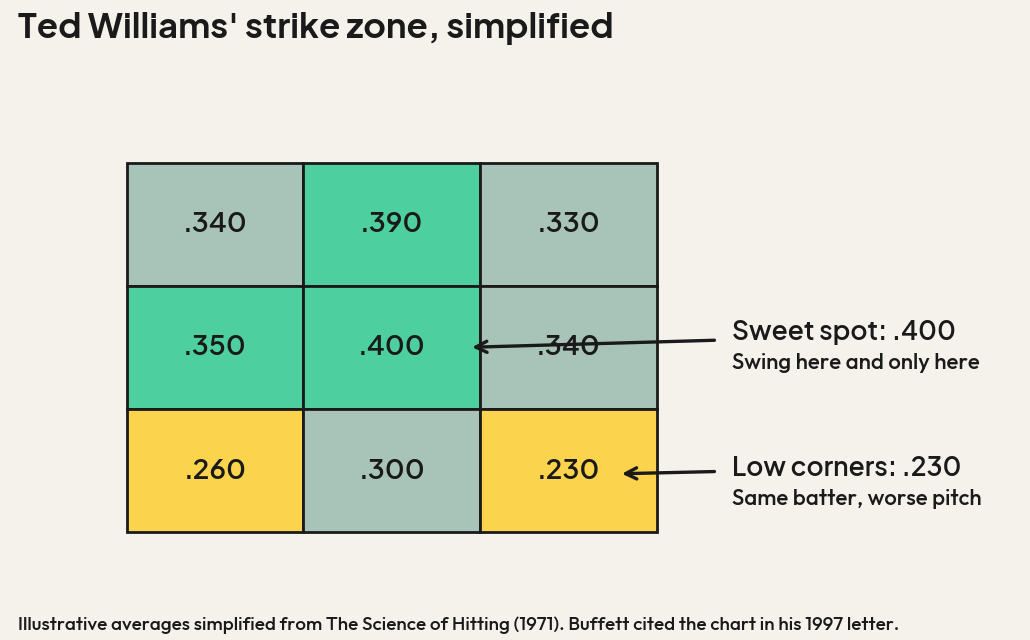
Simplified from Ted Williams’ The Science of Hitting (1971). Same batter, very different outcomes by pitch location.
4. Think in sequences, not snapshots
Chess forces a specific mental motion: if I do this, they do that, then the position becomes this.
You can’t evaluate a move in isolation, only the position it leads to.
Investing rewards the identical motion, and most market commentary skips it. A headline is a snapshot, but the sequence is where the money is. If rates fall, what refinances, and who benefits from what refinances, and what does that do to the sector nobody’s discussing?
You don’t need to see ten moves ahead. Seeing two, consistently, puts you ahead of most of the board.
5. Tilt is the real opponent
Chess players have a word for the state where losses compound: tilt.
You lose one, the dopamine debt demands immediate repayment, you queue the next game angry, and you play it worse. Wins do the same thing in reverse. Three in a row and you start playing loose, convinced you’re seeing the board better than you are.
Both versions show up in trading accounts every single day, and the lesson that took me years to accept is that the opponent across the board barely matters.
There will always be someone better, someone with more capital, someone with faster information.
The game you can win is the one against your own impulses.
One blunder can undo forty accurate moves, and one oversized, emotionally driven position can undo a year of discipline. The account rarely blows up from bad analysis so much as from a good analyst on tilt.
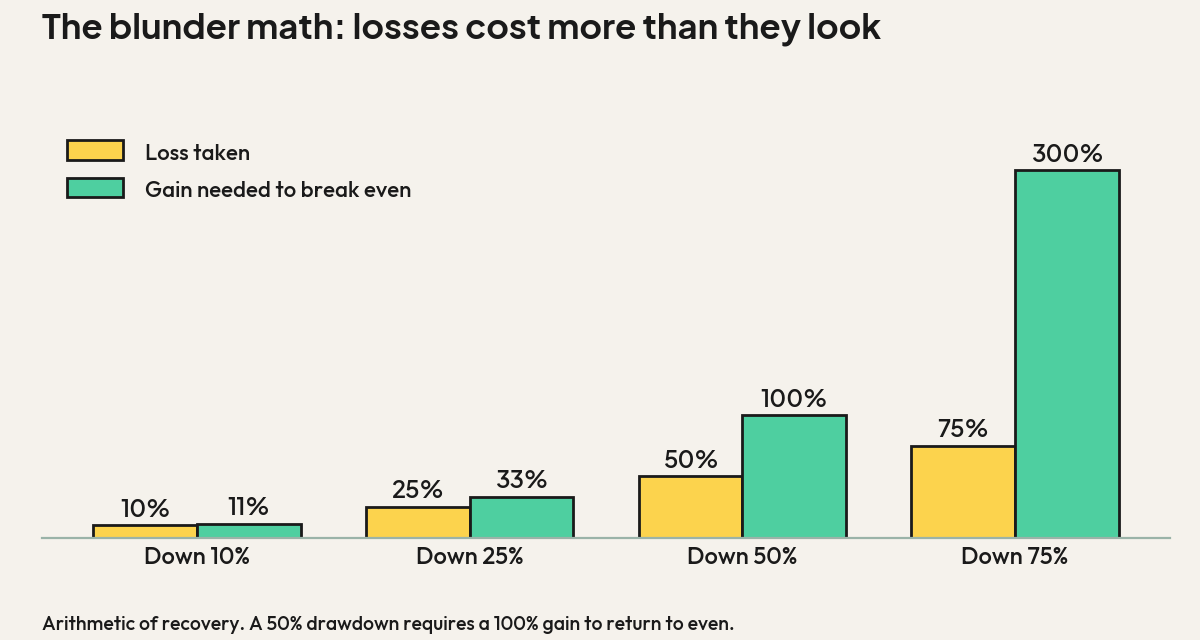
Recovery asymmetry: the deeper the drawdown, the steeper the climb back to even.
6. Use the tool built for the job
Chess tactics have names because they’re tools with defined purposes. A pin, a fork, and a skewer each do one specific job, and you reach for the right one when the position calls for it.
Markets offer the same toolkit, and most retail investors either ignore it or misuse it.
A stop loss is a resignation offered on your terms rather than the market’s.
An option is defined risk, purpose-built for expressing a view with a known maximum loss, though it often gets treated like a lottery ticket instead.
Position sizing is the unglamorous one, the tool that decides whether any single mistake is recoverable.
None of these are exotic. They’re tactics, and tactics only work when you drill them before you need them.
Markets: A Game That Never Ends
A fair reading owes chess its limits as a metaphor.
It’s a closed game with perfect information, two players, and fixed rules, while markets are open, adversarial in a thousand directions at once, and governed by rules that get amended mid-game. The lessons transfer, but they transfer imperfectly, and anyone telling you a board game fully maps to global capital flows is selling something.
The deepest difference, though, is the one I’d leave you with.
Every chess game resolves in checkmate, resignation, or a draw, and there’s a moment where the clock stops and you know the result. Markets never grant you that moment. No final position, no handshake, just capital moving continuously from one set of decisions to another, forever.
The goal shifts from winning the game to still playing it well in year twenty.
Chess games end. Markets don’t.
This Week In 2 Minutes

Volatility-Proof Loans Sound Great. That’s the Problem. (July 14)
Strike’s new bitcoin-backed loans promise no liquidations during the term, adapting the buy-borrow-die playbook wealthy families run on stock portfolios. The protection is priced in: 10.44% to 14.2% APR against 6% to 8% for traditional stock-backed loans, a premium that funds the hedges, with borrowing capped at 45% of posted collateral and a $2.1 billion Tether facility behind it.
Rather than disappearing, the risk moves into the rate, the six-month balloon payment, and the borrower’s own discipline. A borrower who reaches maturity with cheaper collateral faces a scheduled liquidation instead of a surprise one, plus a capital gains bill if they walk away. The piece argues these loans suit disciplined borrowers at 20% to 25% loan-to-value with real repayment plans, and nobody else.
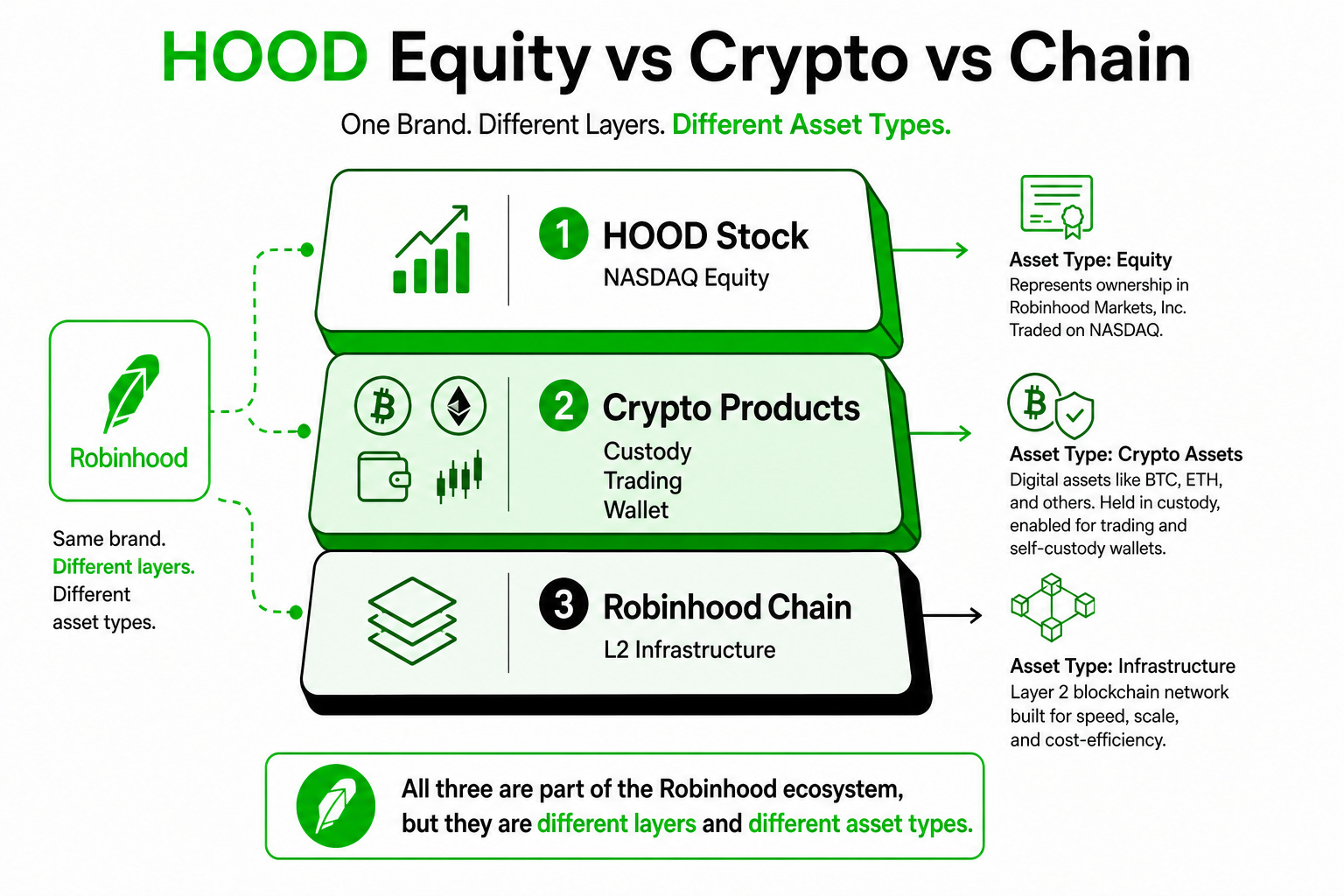
$18 Billion a Quarter Is Moving Into One App (July 16)
Robinhood pulled in $18 billion of net deposits in a single quarter, growing above a 20% annualized pace, with $307 billion now on the platform and 4.3 million Gold subscribers. The article’s frame is Amazon around 2005, when Prime turned a bookstore into the everything store: nine interlocking products that make leaving expensive are the real product.
The quarter also showed the cracks: revenue and earnings both missed, crypto trading revenue fell 47%, and prediction markets (up 320%, now bigger than crypto revenue) live in a regulatory gray zone. Watch the deposit velocity rather than the earnings line, because if capital keeps consolidating through a down market, the switching-cost moat is proving durable.
Market Winners 🏆
The Big Banks. All five majors beat on the same Tuesday morning, combining for $49 billion in quarterly profit, up 39% from a year ago. JPMorgan’s $21.2 billion was the largest quarterly profit in US banking history, and Goldman Sachs jumped 7.3% on the day after revenue rose 39% on trading and a wave of IPO fees, including roughly $500 million tied to the SpaceX listing. Dealmaking, trading, and underwriting are all firing at once, which makes the banks the clearest earnings winners of a high-rate, high-volatility year.
Crude Oil. Brent surged roughly 12% for the week to $88.10 as the US and Iran traded strikes for six consecutive nights, including an Iranian attack on a Kuwaiti power and desalination plant. Energy remains the year’s stealth leader, with the XLE sector fund up nearly 29% in 2026. Crude at these levels re-arms the inflation hawks just as the CPI data finally broke the market’s way, which sets up the central tension for the July 28 Fed meeting.
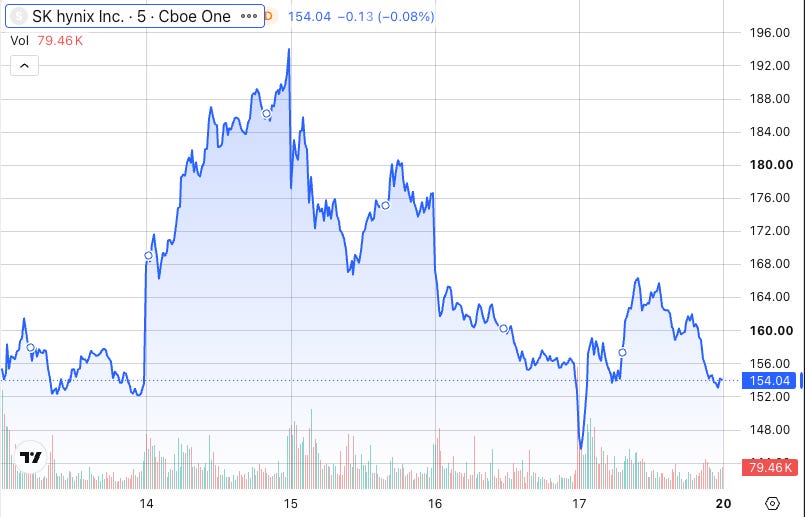
SK Hynix (SKHY). The record $26.5 billion listing survived a brutal first full week: down near its $149 offer price Monday, up 27% Tuesday, dragged lower by the chip rout and a surprise Bank of Korea rate hike, then up 8% Friday after HSBC called it a top chip pick. It finished around $159.91, roughly 5% above Monday’s close, in a week the semiconductor index entered a bear market. Holding up through that tape is early evidence investors genuinely wanted a liquid US vehicle for AI memory exposure.
Market Losers 📉
Semiconductors. The VanEck Semiconductor ETF dropped roughly 9% for the week and the Philadelphia Semiconductor Index entered bear-market territory, more than 20% off its highs, with global chip stocks shedding $3.3 trillion in value since June. Friday alone saw AMD down 5%, Applied Materials, Lam Research, KLA and Arm each near 4%, and Nvidia down 2.2%. The triggers were a repricing of what AI demand costs to serve plus a new Chinese model from Moonshot AI claimed to rival top US systems. Chips are the market’s leadership, so this selloff is the second half’s defining question.
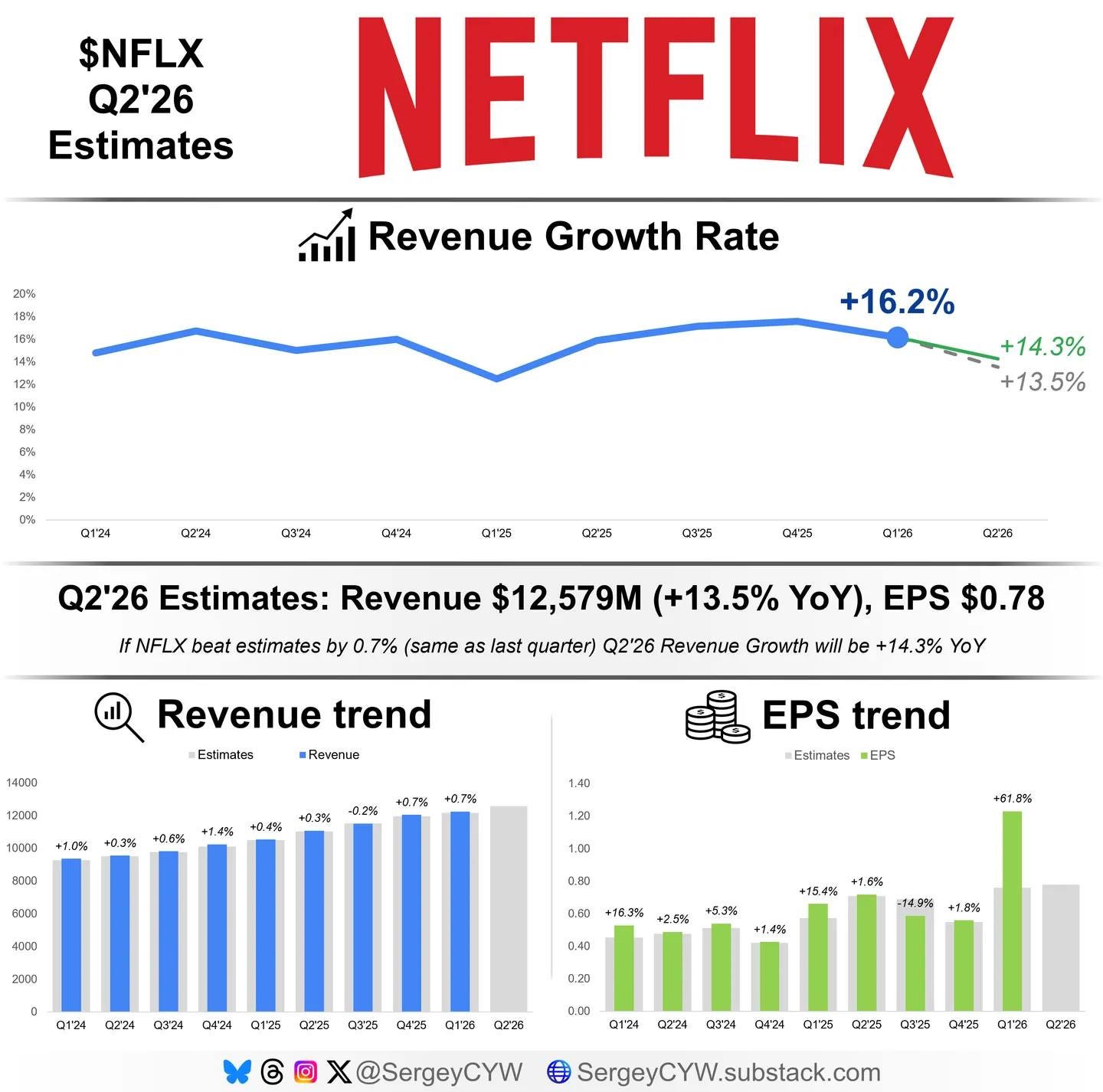
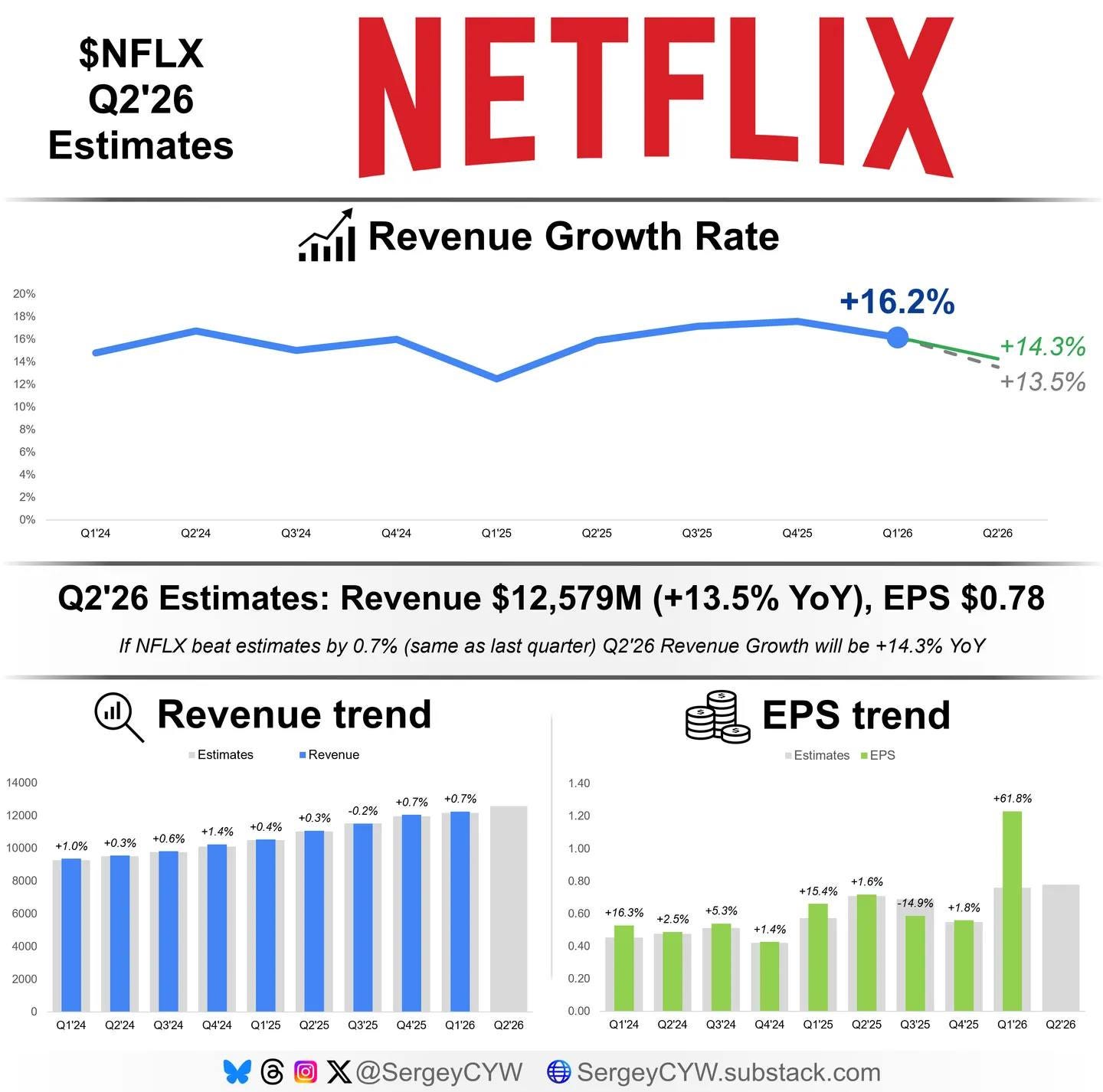
Netflix (NFLX). Netflix dropped more than 7% Friday to a 52-week low despite an in-line quarter, because its third-quarter revenue guide of $12.86 billion undershot consensus near $13 billion and the company disclosed less viewership data than investors wanted. The stock is down about 40% over the past year. Growth decelerating below 12% while transparency shrinks turns the streaming bellwether into a show-me story on pricing power.
Bitcoin (BTC). Bitcoin failed the week’s easiest test. A dovish CPI popped it to $65,235 Tuesday, but it was rejected at $65,000 twice and closed the week near $62,661, down about 2% and below its 20-day moving average. ETF inflows stayed positive but faded from roughly $250 million around CPI day to double-digit millions by Thursday. An asset that can’t rally on falling inflation and record bank profits is showing exhausted marginal demand, which raises the stakes for next week’s CLARITY Act vote.
What to Watch Next Week 👀
Alphabet and Tesla Earnings (Wednesday, July 22). The AI trade’s biggest test lands midweek, with Intel reporting the same week. After a chip rout driven by fears about hyperscaler spending, Alphabet’s capex guidance is the single number to watch: a raise could reassure investors that demand is real, or confirm the margin-burn fear that sank TSMC. Tesla brings the robotaxi narrative days after Lucid announced a fleet partnership with Uber and Nuro.
CLARITY Act Floor Vote (week of July 20). Majority Leader Thune has pledged a Senate vote before the August recess on the merged crypto market-structure bill, which hands the CFTC exclusive jurisdiction over digital-commodity spot markets. The draft omits the ethics provision Senate Democrats set as their price, three senators are publicly opposed, and passage needs 60 votes including at least seven Democrats. Handicappers put it near a coin flip; failure likely pushes US market-structure law to 2027 and tests bitcoin’s soft footing at $62,000.
US-Iran and the Oil Tape. Six straight nights of strikes, retaliation across six countries, and Houthi threats in the Red Sea leave Brent at $88.10 after a 12% week. Any disruption at the Strait of Hormuz points crude back toward April’s $114 spike zone and revives the September hike case, while de-escalation unwinds the year’s best sector trade. This one sets the temperature for everything else.
Matthew Snider is the founder of Block3 Strategy Group, author of “Warren Buffett in a Web3 World,” and publisher of the BitFinance newsletter. He holds a Series 65 and MBA, and has been an active participant in digital asset markets since 2015. This article is for educational purposes only and should not be considered financial advice. Always consult with a qualified professional before making investment decisions.
Sources
Ted Williams with John Underwood, The Science of Hitting, 1971.
CNBC: S&P 500 closes lower, Nasdaq falls more than 1% as chip stocks suffer
Bloomberg: Cool Inflation Data Lowers Fed Rate Hike Probability
CNBC: Bank earnings takeaways, from Goldman’s SpaceX IPO fees to JPMorgan’s AI job cuts
Yahoo Finance: Energy Refuses to Quit, XLE Up 29% YTD
CNBC: Netflix earnings Q2 2026
24/7 Wall St: SK Hynix Jumps 8% on Bargain-Hunting Rebound
FX Leaders: Bitcoin Price Forecast as BTC Falls Below $64K
CoinShares: Market Update, 17 July 2026