BitFinance Weekly Round Up 2/28

Buffet Bot Diaries - now with stocks!
The original Buffett Bot was built to manage digital assets. But my larger vision is to replicate the strategy for traditional equities (via Alpaca) and prediction markets (via Kalshi) so that we can grow capabilities and diversify the asset base.
The equity version works on the same structural logic but is focused on stocks, and it connects to Alpaca, a brokerage API that lets you execute trades programmatically without needing to touch a traditional platform.
For the past week, Buffett Bot has been running on a $500 paper trading account to prove out functionality and build the proof of concept.
“Paper trading” means simulated money.
Every trade gets posted through the Alpaca API exactly the way it would in a live account, but nothing real is at risk. Think of it as a flight simulator. Same conditions, same decisions, same outputs. No actual stakes.
After a few days live, we are sitting at roughly 6% in the green across five open positions (none of which were chosen by me). I want to be careful about reading too much into a few days of paper trading results. That is not the point of this phase. The point is to observe the bot making decisions in real market conditions and understand where the logic holds and where it needs adjustment.
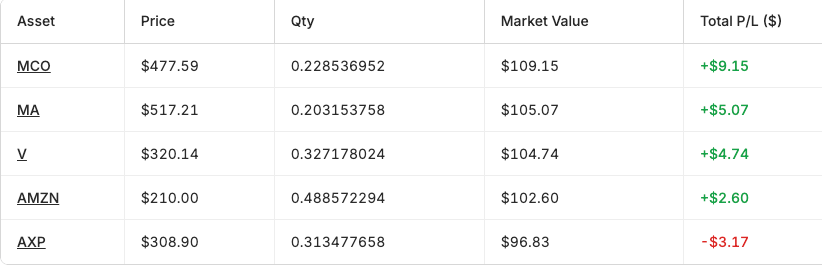
The fun caveat: the bot has the ability to take short exposure through put options. Not naked shorts. It buys puts as a defined-risk hedge when the signals warrant it. This is an important distinction. Buying a put option means your downside is capped at what you paid for the option. You are not writing unlimited liability into the strategy.
The Backtesting Dashboard
Here is where things got genuinely useful.
When I started thinking about how to scale this beyond a single strategy, the obvious question was: how do you quickly evaluate whether a different set of parameters or a different mix of assets would have performed better historically?
So using the data available in the API, I asked Claude Code to help me build out a backtesting capability that pulls two years of historical price data directly from the Alpaca API.
You give it a strategy, a start date (we use January 1, 2024), and a set of assets, and it simulates how the bot would have performed over that full period. The output includes total P&L, max drawdown, volatility, Sharpe ratio, Sortino ratio, short ratio, and number of trades.
Everything you would want in a single view….but you had to re-run it manually every time you wanted to test something new. This is working hard, not smart.
Running backtests manually every time you want to try something is slow. So the next step was asking Claude Code to turn it into an interactive dashboard.
Within minutes, I was blown away by what we had created together.
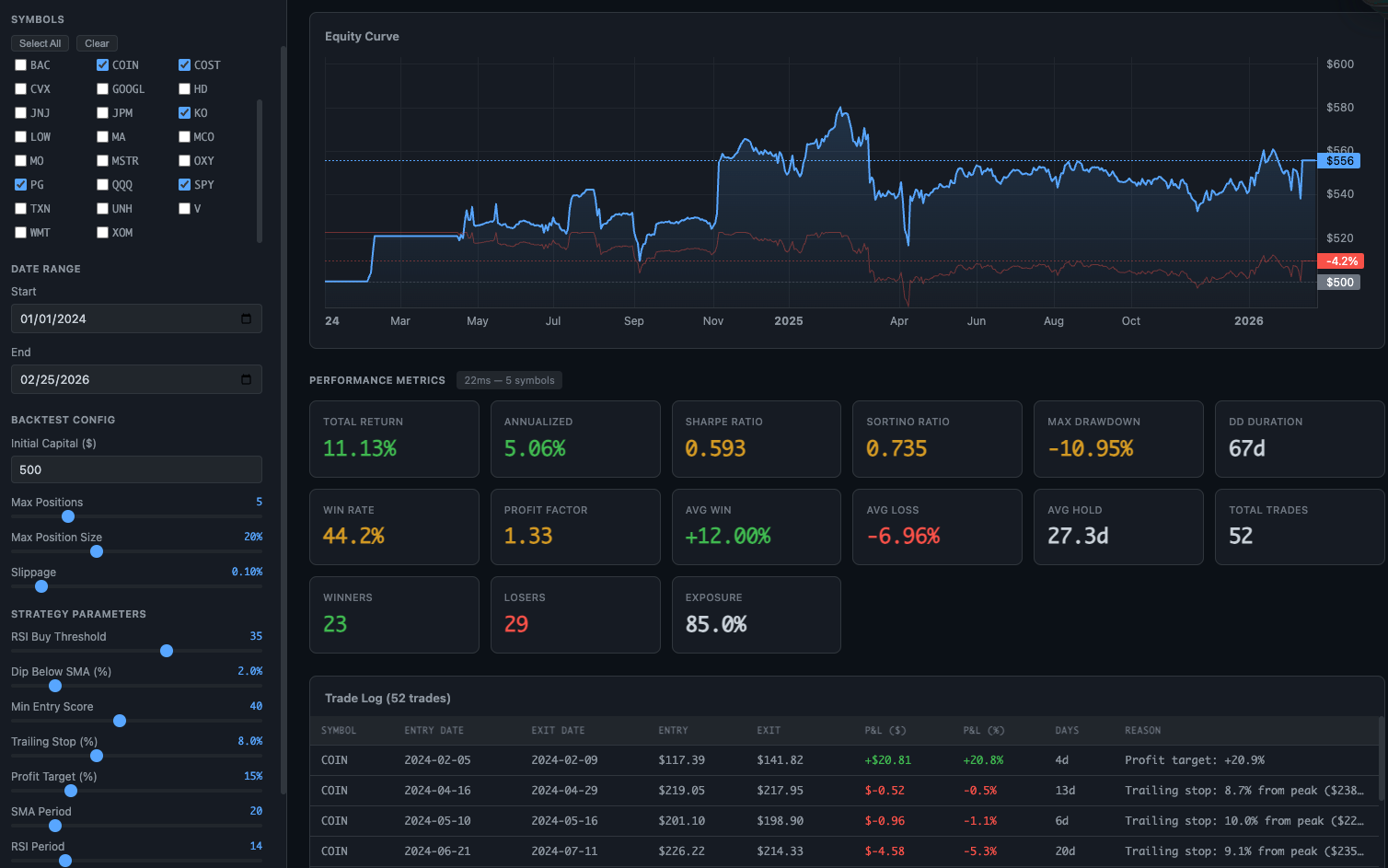
The dashboard has a live chart, all the key metrics highlighted in one place, and the ability to add any ticker you want.
The part I find most useful is the sliders: you can adjust the profit-take threshold, the max drawdown tolerance, and other core parameters in real time and immediately see how that change would have affected the two-year simulated return.
No re-coding required. Just move the slider.
THE BIGGER PICTURE
The longer-term vision here is to hand this kind of tooling to multiple agents who can act as portfolio managers, each running different strategies on different asset classes, dynamically adjusting based on market conditions. The dashboard is the interface that makes that scalable without requiring a human to manually validate every decision.
What I’m Actually Learning
This is the part I did not expect to find interesting.
Running systematic backtests against real historical data forces you to confront a question that sounds simple but is not: does the framework you are using actually reflect how the current market behaves?
The Buffett Bot is named the way it is because the strategy is inspired by Buffett’s principles: buy undervalued businesses, hold with conviction, let compounding do the work. I still believe in that framework as a philosophy.
But what I am learning through backtesting is that the specific metrics Buffett used to identify undervaluation 50 or 60 years ago do not map cleanly onto a market that looks very different today.
The businesses trading at the highest valuations right now are not the asset-heavy industrial companies that classic value screens were designed to identify. They are software platforms with near-zero marginal costs, network effects that compound without capital investment, and earnings power that traditional P/E ratios were not built to capture.
A stock that looks expensive by 1970s value metrics might be genuinely undervalued by any reasonable forward-looking measure.
I’m not saying Buffett was wrong, but the world the bot is operating in is structurally different from the world those principles were developed in. The real work is figuring out how to adapt the spirit of the framework without losing the discipline that makes it useful.
Want to Build Your AI Trading Bot?
Let Me Know!
The Buffett Bot Diaries has generated more inbound than anything I’ve published. Several of you have asked how to build something similar.
If there’s enough interest, I’m putting together a live session covering the full build: the scoring system, the architecture, and how I went from zero coding experience to a working autonomous trader.
This is AI education, not investment advice. The bot is the case study.
If you want in, raise your hand here. I’ll only run it if enough people ask. No drip campaigns. Just a heads-up when it’s ready.
Fill out the 30-second interest form here. 👈
Moving right along…
This Week in Two Minutes
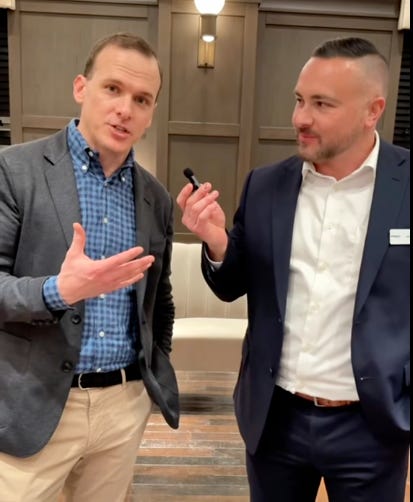
📌 Almost Famous @ Miami Hedge Fund Week (Feb 23)
After 3+ months of hibernation, I traveled to Hedge Fund Week's Digital Asset VIP engagement in Miami Beach. The event brought together 200+ fund allocators, hedge fund managers, and the infrastructure teams building the rails underneath all of it. High energy room, great conversations, and a chance to connect in person with people and teams I have only known through screens.
Exactly the kind of room where real work gets done.👊🏼
Huge shout out to the teams at Withum, BitGo, Securitize and Crypto Insights Group for hosting! Next up: FutureProof in a couple weeks. If you will be there, reach out!
📌 The One-Syllable Thesis (Feb 23)
A Polymarket bettor turned $5,000 into $250,000 by betting Trump would pick JD Vance as VP.
His research methodology:
Trump likes names he can pronounce easily. One syllable. That was the whole thesis.
This article explores what prediction markets teach us about how powerful people actually make decisions versus how we assume they do, why Trump mentioned 16 out of 18 predicted words in a recent speech while a NYC deputy mayor hit zero out of 13, and the uncomfortable parallels between prediction market edges and what would get you arrested in traditional finance.
The question is not whether an investment thesis sounds sophisticated. The question is whether it captures something true about how the decision-maker actually thinks.

📌 Gotta Hold ‘Em All (Feb 27)
Pokemon turned 30 this week and that realization aged me significantly.
From an investment perspective, the numbers are uncomfortable for anyone who has spent three decades feeling good about owning the S&P.
A sealed 1st Edition Base Set booster box went from $100 at retail in 1999 to $496,000 at auction this month. That is a 37% CAGR for 26 years, roughly 902x the return of an equivalent S&P investment and more than double the Magnificent Seven on an annualized basis.
I break down the supply mechanics (every pack opened on a Twitch stream permanently removes sealed product from existence), the covered-call analogy for holding sealed vintage product, and the friction costs (28% collectibles tax rate) that most analyses conveniently skip.
The real edge was never about pulling the right card. It was about understanding that the people who opened their packs were subsidizing the appreciation of the people who did not.
Winners & Losers (Week of Feb 28)
Winners 🏆
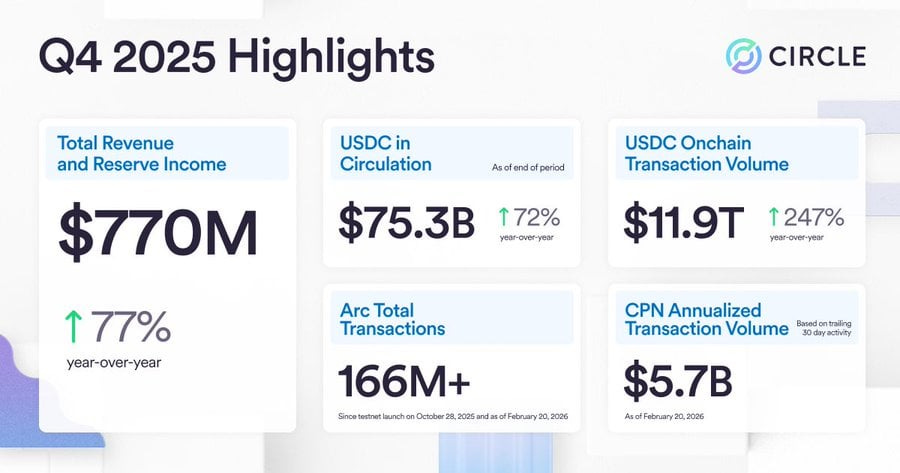
Circle (CRCL). The stablecoin issuer reported Q4 earnings that beat estimates by a wide margin: $0.43 EPS against a $0.16 consensus, with revenue up 77% year over year to $770 million and USDC circulation hitting $75.3 billion. The stock surged 35% in a single session.
The number that matters most? On-chain transaction volume. Q4 saw nearly $12 trillion in capital flow; up 247% from the previous quarter. When a regulated issuer starts processing that kind of volume and the market rewards it with a re-rating while Bitcoin sits below $66,000, it tells you something about where institutional capital thinks the durable value is being built. Stablecoin infrastructure is not a narrative anymore. It is a business. (Just remember that roughly half of those earned fees flow to Coinbase…)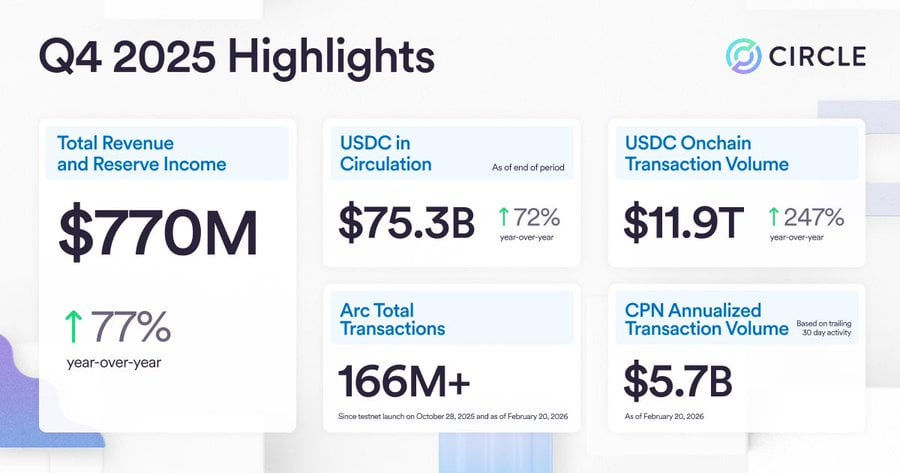
Polkadot (DOT). Up 40% on three catalysts at once: its first-ever supply halving on March 14 (annual issuance cut from 120 million to 55 million tokens, hard cap of 2.1 billion DOT), ETF filings from Grayscale and 21Shares, and a technical breakout above key resistance. Futures open interest peaked at $120 million then collapsed to $60 million as traders took profits. The structural story is real. Whether the market already priced it is a different question.
WisdomTree (WTGXX). The SEC granted exemptive relief for WisdomTree’s tokenized Treasury Money Market Fund to trade 24/7 with instant settlement via USDC. First time a registered mutual fund under the 1940 Act has been permitted to trade and settle continuously on blockchain rails. If you work in fund operations or RIA infrastructure, read that again. The last time the SEC issued structural innovation via exemptive relief at this level was the introduction of the ETF.
Losers 📉
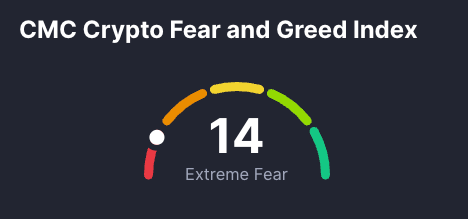
Bitcoin (BTC). Below $63,000 Monday. Above $68,500 Wednesday on a short squeeze that liquidated $400 million in bearish bets. Back to $65,500 by Friday after hot PPI data pushed rate cut expectations further out. Still range-bound between $60,000 and $72,000. Funding rates hit -6%, the most negative in three months. Fear & Greed has been in "Extreme Fear" for most of February, and rising Middle East tensions are not helping. This is not capitulation. This is a market without a catalyst.
Jane Street's Reputation. Terraform's bankruptcy administrator sued Jane Street, alleging the firm front-ran the 2022 Terra collapse using non-public information. The complaint: a Jane Street-linked wallet pulled $85 million from Curve within 10 minutes of Terraform's own quiet $150 million withdrawal. Jane Street called it "desperate" and "baseless." This follows a $4 billion suit against Jump Trading on similar claims. The legal outcomes will take years. The reputational damage landed this week.
Broader Altcoin Market. BCH down 11.5%. APT, ATOM, and SUI off 5-8%. The DeFi Select Index is down 35% year to date, the worst-performing sector benchmark. Futures open interest dropped below $92.5 billion, the lowest since April 2025. When macro dominates, correlations tighten and everything sells together. Fundamentals do not matter much when liquidity is leaving the building.

On Deck for the Week of March 2
The CLARITY Act deadline was March 1. If the White House can broker a deal between the SEC and CFTC on jurisdictional authority over digital assets, the regulatory framework moves from theoretical to operational. If they missed it, the market will price in another round of uncertainty. Either way, this is the single most important policy event for digital asset allocators in Q1.
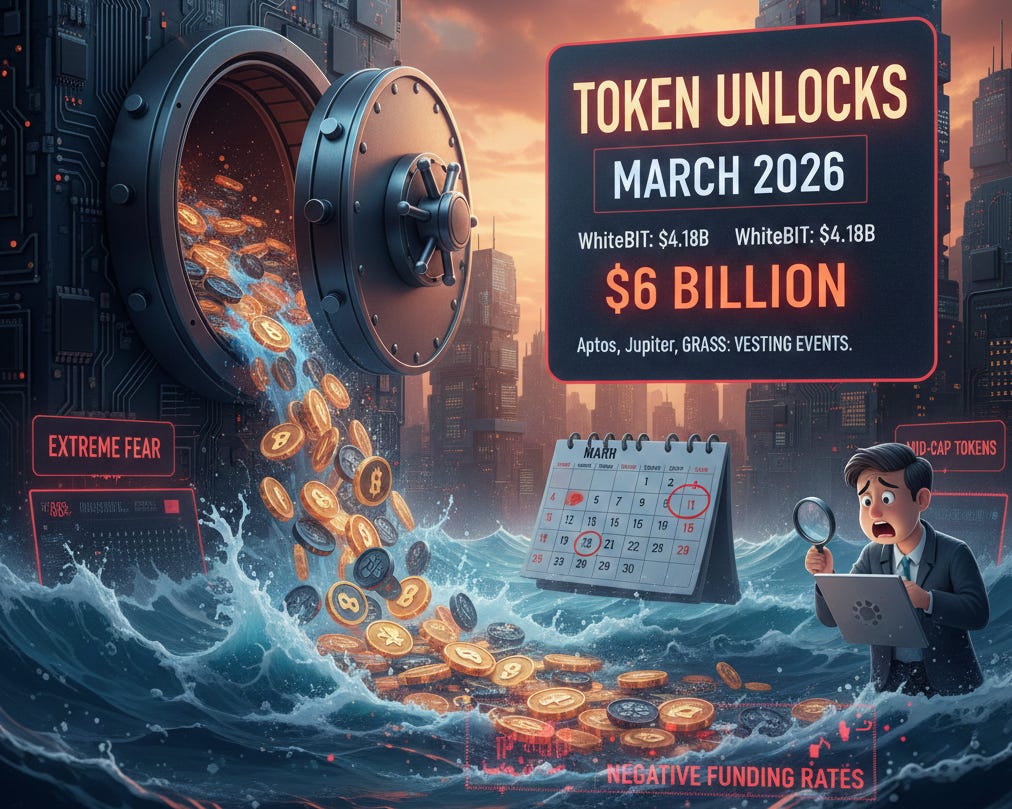
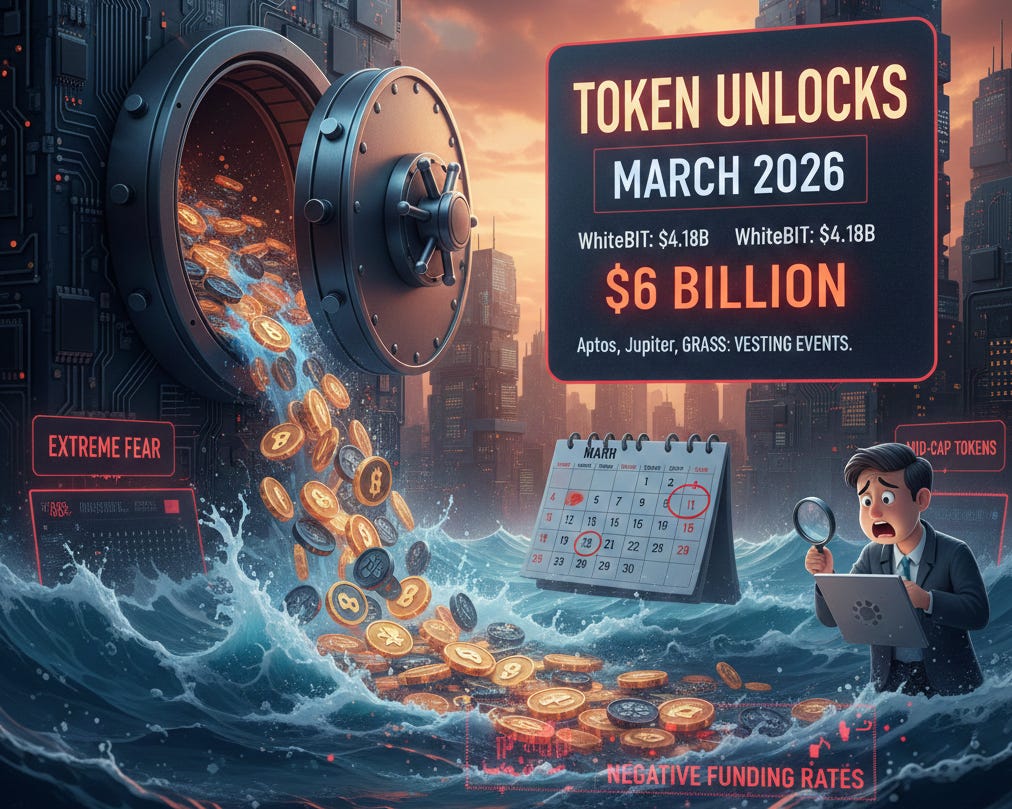
March token unlocks: $6 billion incoming. March is projected to be the largest monthly token unlock of 2026, roughly three times the typical average. WhiteBIT alone accounts for $4.18 billion, with Aptos, Jupiter, and GRASS adding significant vesting events in the first two weeks. In a market already running negative funding rates and sitting in "Extreme Fear," that is not a footnote. If you hold mid-cap tokens, check the vesting calendar before March catches you off guard.
OCC proposed rulemaking on the GENIUS Act. The OCC published a 376-page proposed rule on February 25 to implement the GENIUS Act for federal qualified payment stablecoin issuers. The comment period is open. If you are an RIA or fund manager thinking about stablecoin exposure, the compliance framework is being written right now. Not next year. Now.
Trade carefully out there. Skip the leverage. And if you’re looking for help integrating AI into your advisory practice or building a digital asset framework for clients, you know where to find me.
Until next week.
— Matthew
X: @bit_finance_
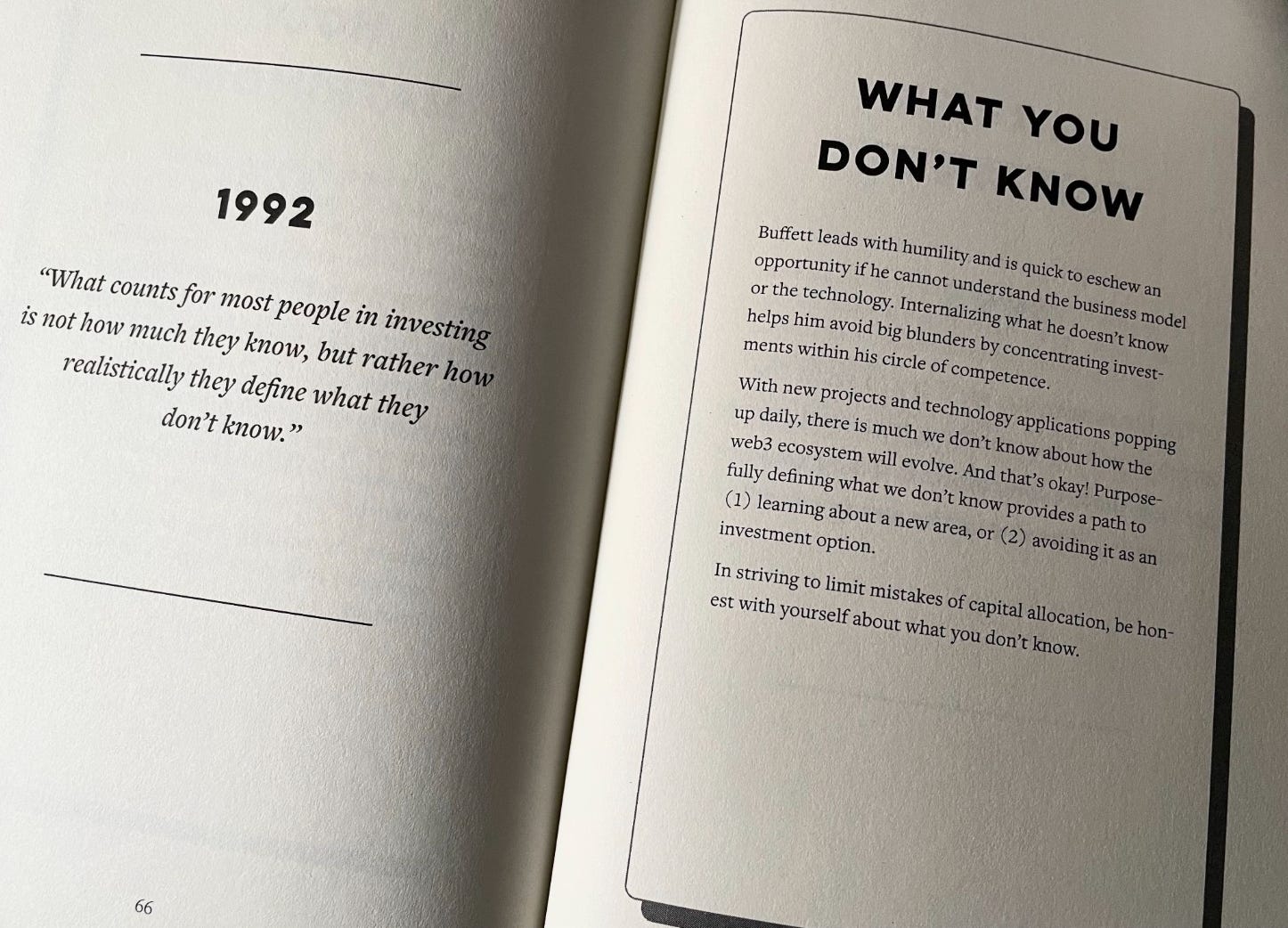
oh! one last thing…if you want to dive deeper into how Buffett’s investing principles applies to digital assets, check out my book.
We took 1,300+ pages of wisdom from the Oracle of Omaha and condensed it into a snackable, easy-to-read guide for digital asset investors. Pick up your copy today!
Matthew Snider is the founder of Block3 Strategy Group, author of “Warren Buffett in a Web3 World,” and publisher of the BitFinance newsletter. He holds a Series 65 and MBA, and has been an active participant in digital asset markets since 2015. This article is for educational purposes only and should not be considered financial advice. Always consult with a qualified professional before making investment decisions.