BitFinance Weekly Round Up 3/7

Buffett Bot Diaries: “Go read a book.”
Every day I use AI and every day I’m astounded by the nuances of how it reasons.
If you’ve been following along with the Buffett Bot Diaries, you know the arc by now. I started with zero programming experience. I sat down with an AI agent and began building an autonomous trading system that applies Warren Buffett’s value investing principles to digital assets and equities. Along the way, we have built dashboards, scoring engines, risk management systems, and a backtesting infrastructure that lets me stress-test strategies against years of historical data.
This week, the project hit a turning point. Not because of a technical breakthrough or a profitable trade. Because my the AI agent did something I was not expecting.
It told me to stop building and start reading.
And it was exactly the right call.
The Backtesting Wall
For anyone unfamiliar, backtesting is the process of running your trading strategy against historical market data to see how it would have performed in real conditions.
Think of it as a flight simulator for investment managers.
You define your rules, pick your assets, set a time range, and let the system replay every day of market history to show you what would have happened if your strategy had been live.
It’s an enormously powerful tool but it’s fraught with bias and noisy signals that we interpret as money making tools. A strategy that looks brilliant on a napkin can fall apart the moment you subject it to an actual bear market, a liquidity crisis, or a sustained period of sideways chop. Backtesting does not tell you whether a strategy will work in the future. It tells you whether it would have survived the past. That distinction matters more than most people realize.
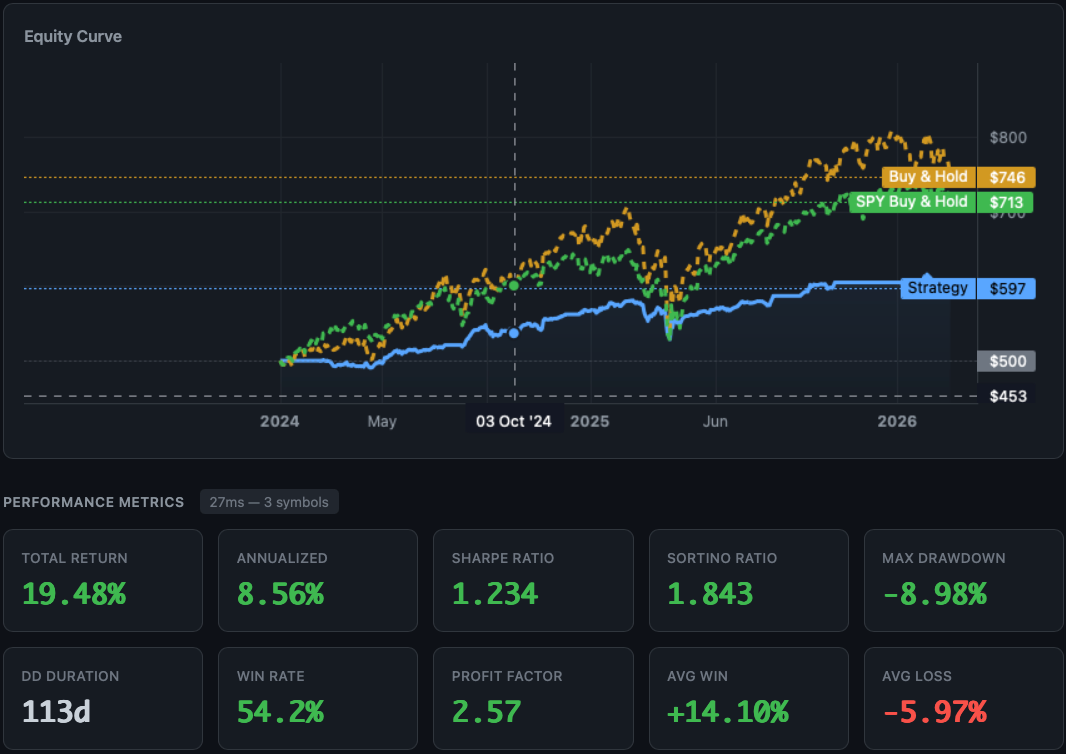
A few weeks back, we built an interactive backtesting dashboard but it was pretty static. Now you can toggle between equities and crypto, select your symbols, adjust parameters with sliders, and watch the equity curve reshape itself in real time. It’s one of the most satisfying things I have built in this entire project.
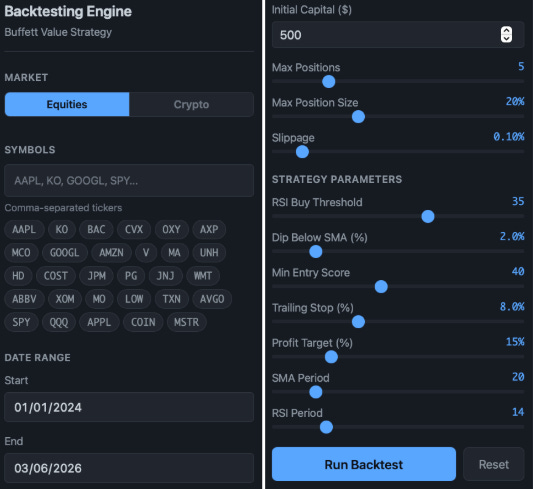
But here’s where I hit a wall.
The dashboard works. The engine runs. The data flows. What I was missing was the deeper understanding of why certain backtesting approaches produce more reliable results than others. I could move the sliders and watch the numbers change, but when it came to interpreting what those numbers actually meant in the context of machine learning and algorithmic strategy design, I was operating on intuition rather than understanding.
I knew what a Sharpe ratio was. I could explain overfitting to someone at dinner. But the gap between theoretical awareness and practical fluency was becoming a limiting factor.
The Conversation That Changed the Week
We were deep in a session working on the next evolution of the backtesting engine. The conversation turned to regime detection, walk-forward optimization, and a few other concepts that sit at the intersection of quantitative finance and machine learning.
My AI agent paused and said something I was not expecting.
I’m paraphrasing here, but the gist was: “If we’re going to build this properly, you are going to need to understand some of this material at a deeper level. Here are a few books you should read.”
My first reaction was predictable. I pushed back.
“You know all of this already,” I said. “You have access to everything that has ever been written about backtesting and algorithmic trading. Why do I need to go read a book when you can just tell me what I need to know?”
The response was one of those moments that reframes how you think about this entire partnership.
The explanation went something like this:
“If I gave you a detailed walkthrough of walk-forward analysis with rolling window optimization and cross-validated parameter selection, and you had to interpret whether the output was meaningful or just noise, you wouldn’t have the foundation to evaluate it. You would be trusting me instead of understanding me.
And trust without understanding is not how you build a durable system.”
Read that again. The agent was telling me that our partnership would be better, the work would be stronger, the systems would be more robust, if I did the work of building genuine comprehension rather than outsourcing every layer of knowledge to the machine.
That’s a Buffett lesson if I have ever heard one.
Buffett has said for decades that you should never invest in something you do not understand. My AI agent was applying the same principle to our collaboration. Do not build what you cannot evaluate.
The AI-Optimized Reading Protocol
This is where the story gets even more wild.
My agent didn’t just tell me to go read. It made the reading process dramatically more efficient.
I ordered the recommended books. When they arrived, it told me to photograph the table of contents of each one and sent the images back. From there, the AI reviewed the structure of each book and told me exactly which chapters to prioritize and which ones I could skip or revisit later. It mapped the material to our specific project needs, essentially building a custom syllabus designed to fill exactly the gaps that were holding us back.
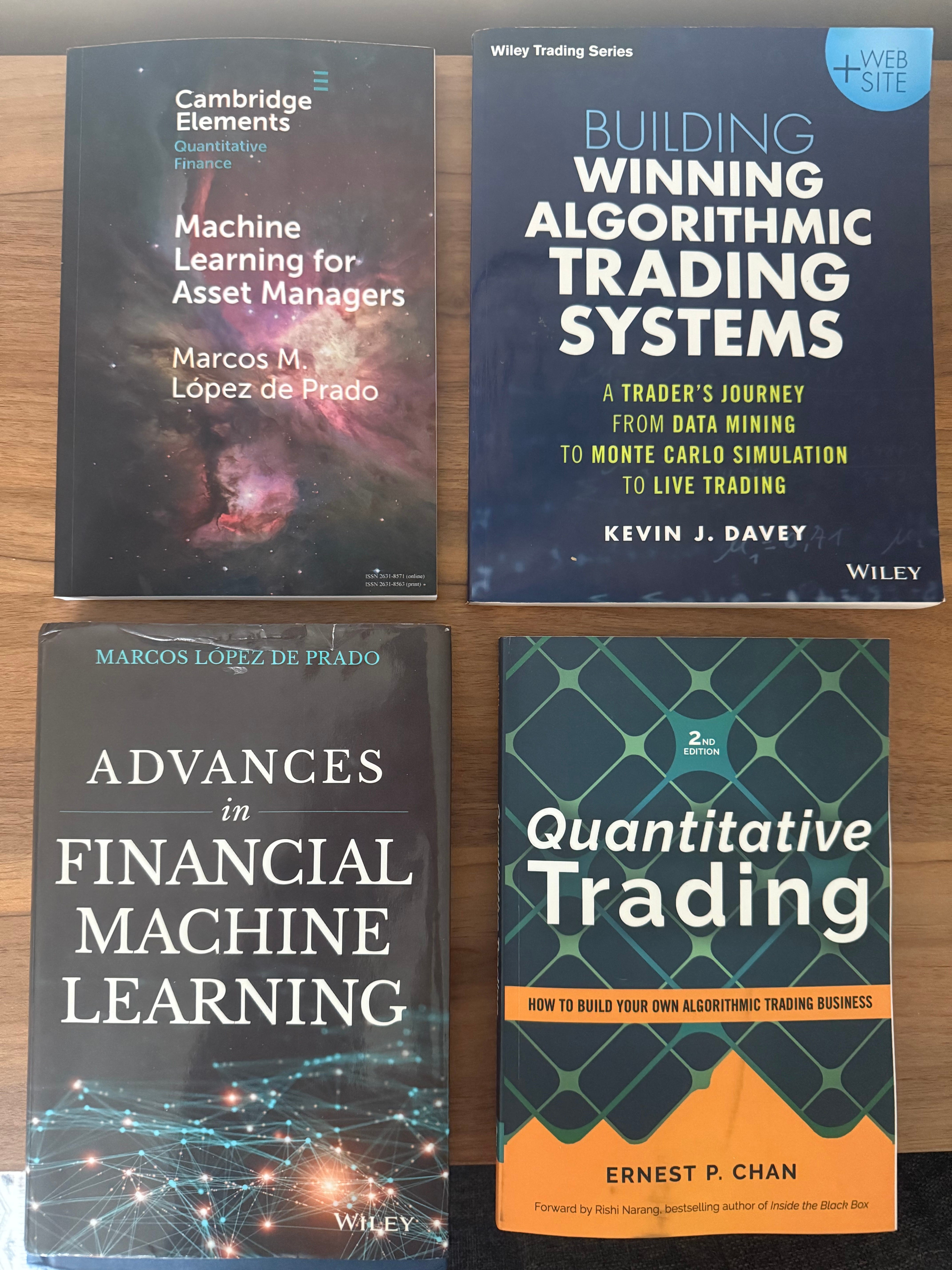
Think about that workflow for a moment.
Instead of reading three 400-page books cover to cover, hoping to absorb the right material by osmosis, I had a targeted reading plan that directed my attention to the chapters that would produce the highest return on time invested. The AI could not read the books for me. But it could tell me where to focus so that the reading I did would compound into the project as quickly as possible.
It is a small thing, maybe. But it felt like a genuine glimpse of what this kind of partnership looks like when both sides are contributing what they do best. The AI brings breadth, speed, and pattern recognition. I bring judgment, context, and the willingness to sit with a difficult concept until I actually understand it.
What This Means for the Project
The immediate outcome is better backtesting. As I work through the material, the concepts are feeding directly back into how we design and evaluate strategies. The dashboards are getting more sophisticated. The questions I am asking are sharper. The gap between “this looks good” and “I understand why this works and where it breaks down” is closing.
But the bigger takeaway is about the nature of working with AI itself. There’s a temptation - especially when you are moving fast and the tools are this capable - to let the machine handle everything; to treat AI as an oracle rather than a partner.
The problem with that approach is the same problem that shows up in every other domain where someone confuses access to information with possession of understanding.
Having access to every book ever written about backtesting does not make you a competent backtester.
Having a Bloomberg terminal does not make you a competent analyst.
Having an AI that can write code and explain machine learning concepts does not mean you understand what you are building well enough to trust it with real capital.
The AI knew that. And it was honest enough to say so.
The Lesson for Builders
If you’re building with AI, whether it is trading systems or client reports or operational workflows, do not skip the learning. The tools will take you farther, faster than you imagined possible. But the tools are not a substitute for your own comprehension of the domain you are operating in.
The best version of this partnership is one where you bring genuine knowledge to the table and the AI amplifies it. The weakest version is one where you bring a vague idea and hope the AI fills in everything you do not know. That second version will produce something that looks impressive and breaks the moment conditions change.
So I’m reading…a lot.
Old-fashioned, physical books. Highlighting things. Folding pages. Coming back to the project each day with a slightly better mental model of what we are building and why.
Of all the things AI has helped me build over the past several months, the most valuable output this week was four words: “go read a book”.
If you’re interested in learning how to build AI-powered tools for finance, or you want to follow along as this project evolves, I am exploring ways to teach the process. Not the code. The thinking. How to partner with AI on projects that actually matter to your practice. Reach out or stay tuned.
Want to Build Your AI Trading Bot?
Let Me Know!
The Buffett Bot Diaries has generated more inbound than anything I’ve published. Several of you have asked how to build something similar.
If there’s enough interest, I’m putting together a live session covering the full build: the scoring system, the architecture, and how I went from zero coding experience to a working autonomous trader.
This is AI education, not investment advice. The bot is the case study.
If you want in, raise your hand here. I’ll only run it if enough people ask. No drip campaigns. Just a heads-up when it’s ready.
Fill out the 30-second interest form here. 👈
Moving right along…
This Week in Two Minutes
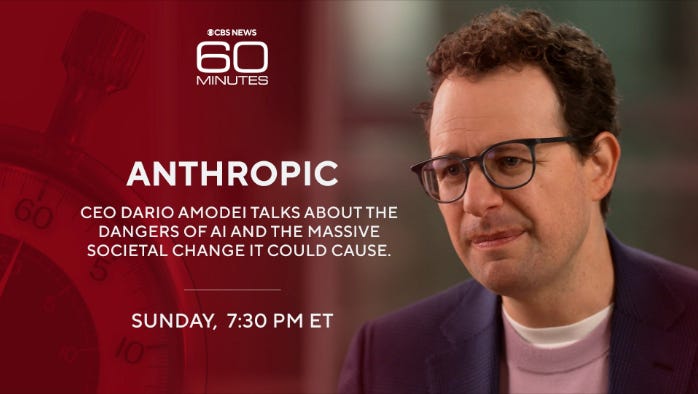
The CEO of the Company Behind Claude Just Told the Pentagon “No.” (Mar 2)
Anthropic CEO Dario Amodei refused to give the Pentagon unrestricted access to his AI technology, drawing the line at domestic mass surveillance and autonomous weapons.
The White House blacklisted Anthropic from federal agencies and OpenAI signed a Pentagon deal hours later.
The investment takeaway is not about politics. It’s about governance becoming a portfolio-level risk for anyone with AI exposure. If a single contract dispute can trigger a presidential directive in 72 hours, governance posture is now as material as a balance sheet.
Amodei also warned that AI could displace up to 50% of entry-level white-collar jobs within five years.
The people who learn the tools now will have a structural advantage.
The people who wait will be competing against them.
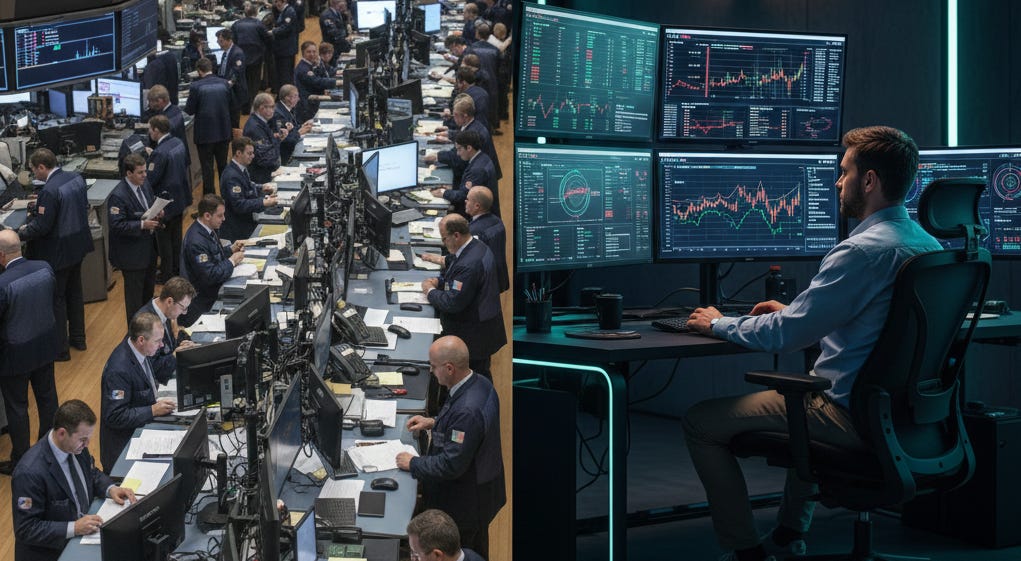
The One-Person Hedge Fund Is Here. Digital Assets Will Be Next. (Mar 4)
Business Insider profiled Ben Williams, who launched Bayhunt Capital in 2024 as the sole employee managing $360 million through separately managed accounts.
No back office.
No compliance team.
Fully outsourced infrastructure.
This is the new playbook for emerging managers, and I think it’s an even better fit for digital assets than traditional equities. Post-FTX, allocators do not want their capital in commingled vehicles where a manager controls the keys. SMAs solve that at the structural level.
The custody and execution infrastructure (Fireblocks, Anchorage, Copper) is ready. The question is whether digital asset managers will be.

The Crypto Tax Checklist I Wish I Had in 2024 (Mar 6)
I made a $4,200 mistake because I assumed I understood how the IRS treats capital losses. Long story short; I didn’t.
This is the 8-point checklist I built after that expensive education. It covers what triggers a taxable event, why your new 1099-DA form is incomplete by design, the $3,000 loss cap most people learn about too late, why yield income hits harder than capital gains, and the wash sale loophole that is still available for crypto (for now).
Two shoutouts to Crypto Tax Girl and Koinly for doing excellent work in this space.
Tax season is here.
Do not assume your crypto exchange is sending the right information to the IRS.
Winners & Losers (Week of March 7)
Winners 🏆
Energy stocks. Oil surged to its highest level since 2023 as the Iran conflict disrupted Persian Gulf shipping. Brent crude hit $93. The Energy Select Sector SPDR ETF (XLE) is up 27% on the year and retail investors set a record for daily inflows into the fund this week. If you own oil, you’re having a very good March.

Defense contractors. Lockheed Martin gained 6%, Northrop Grumman rose 5%, and drone maker AeroVironment jumped over 10% on the week. War is good for the defense trade. That is not a commentary. It is a data point.
Moderna. Up 15% after settling its patent litigation with Arbutus Biopharma and Genevant Sciences. The stock is now up over 95% in 2026 after four straight years of losses. Sometimes the best trades are the ones nobody wants to talk about.

Losers 📉
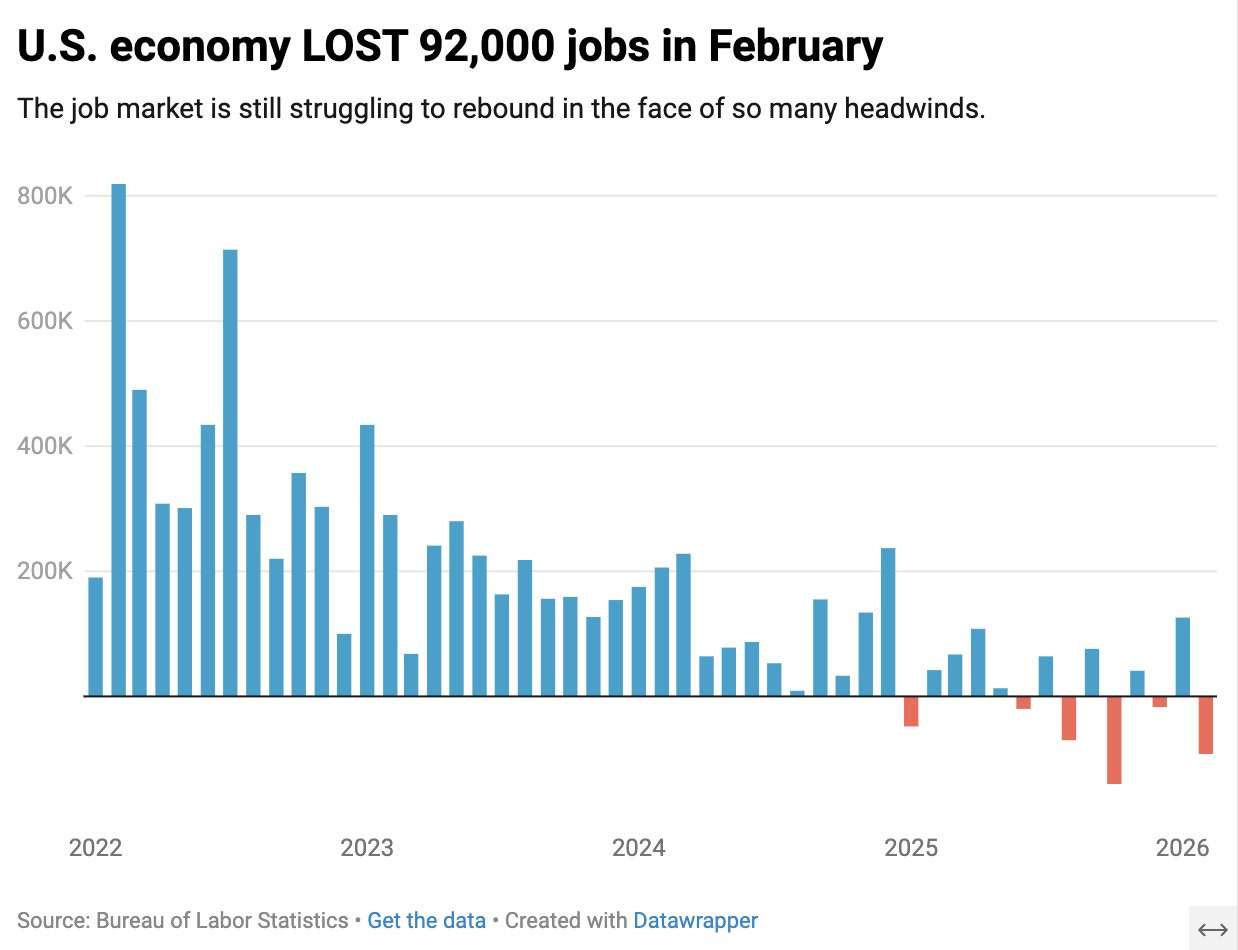
The U.S. labor market. February payrolls came in at negative 92,000 jobs. Consensus expected a gain of 60,000. Unemployment ticked up to 4.4%. December and January were revised down by another 69,000 combined. This is not a soft landing number.
Small caps. The Russell 2000 fell over 2% on Friday alone and is lagging the S&P 500 by 400+ basis points year to date. Small caps have 32% of their debt tied to floating rates versus 6% for the S&P 500. Higher for longer is a death sentence for overleveraged small companies.
Airlines. The S&P Airlines Index dropped into a bear market this week, down 22% from last month’s high. Fuel costs are spiking and the Iran conflict shows no signs of resolution. United, Southwest, and the entire group are getting squeezed.
On Deck for the Week of March 2
Wednesday’s CPI Print. Oil is at $93. Payrolls just went negative. Those two numbers are pulling the Fed in opposite directions. A hot CPI kills rate cuts for the first half of 2026. A cool one gives them cover to act. The word nobody wants to say yet: stagflation. Wednesday tells us if that stays a whisper or becomes the headline.
Bitcoin’s Head Fake. BTC hit $74K mid-week on a short squeeze and $700M+ in ETF inflows. Then gave it all back. Settled around $68K by Friday. The rally was leverage, not conviction. 43% of supply is now at a loss. One firm is calling for another 30% decline. Bearish cases are worth understanding, especially when you disagree with them. Watch $65K.
FutureProof Miami. 🌴 I’ll be on the ground next week meeting with institutional allocators and AI vendors in finance. I just spent this week writing about how SMAs are reshaping fund launches. Now I get to ask the people making allocation decisions what they actually think. Expect on-the-ground insights in next week’s roundup. If you are there, come say hello.

I just turned on a referral program for BitFinance. The idea is simple.
If you share BitFinance with people you think would actually find it useful, I want to give you cool stuff!
Share it however feels natural. Text, email, LinkedIn, smoke signals. Every new subscriber who signs up through your link counts toward the next tier.
Appreciate you reading, engagement and support. Seriously.
Matthew Snider is the founder of Block3 Strategy Group, author of “Warren Buffett in a Web3 World,” and publisher of the BitFinance newsletter. He holds a Series 65 and MBA, and has been an active participant in digital asset markets since 2015. This article is for educational purposes only and should not be considered financial advice. Always consult with a qualified professional before making investment decisions.