Pokemon Cards Cracked Tokenization’s Problem

In February I wrote about Pokemon’s 30th anniversary and argued that the people ripping packs were subsidizing the people who didn’t. That turns out to have been a footnote to something larger.
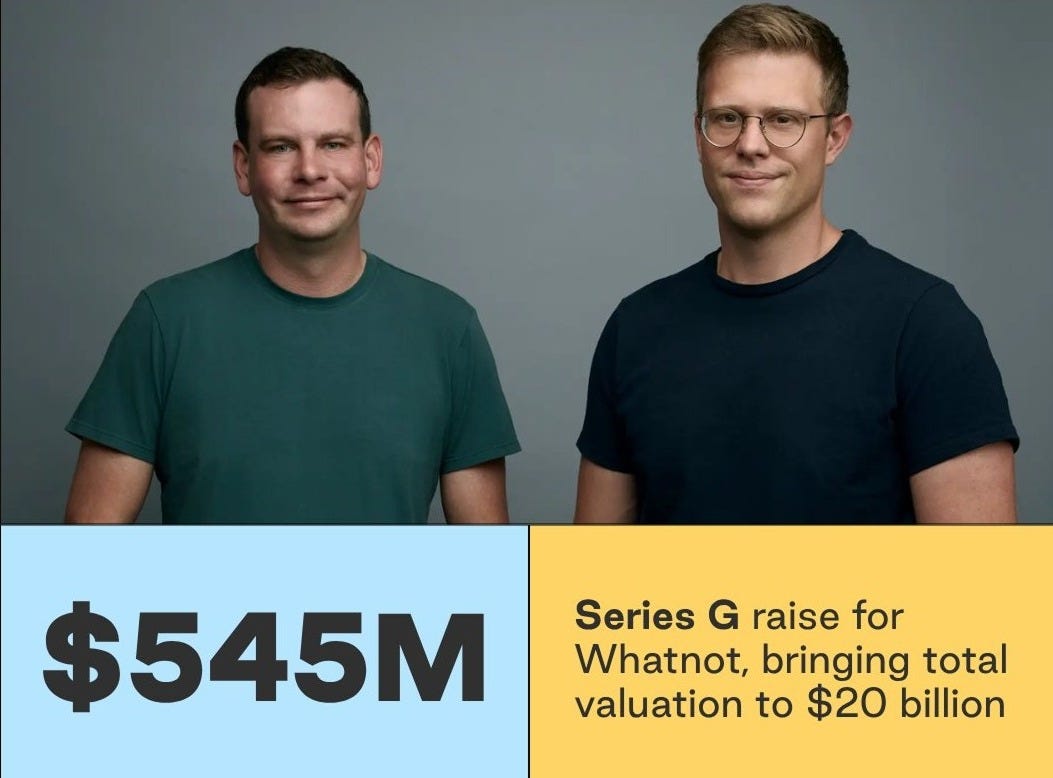
On August 7, Whatnot announced a $545 million Series G at a $20 billion valuation, nearly double its $11.5 billion mark nine months earlier. The company started in 2019 out of a rental house full of Funko Pops, selling Pokemon cards. Its first-half 2026 gross merchandise volume passed the $8 billion it did in all of 2025.
A live shopping app for collectibles is now worth more than Best Buy.
This is the news that most people are covering right now. If’ you’ve never used Whatnot, it’s a surprisingly sticky experience. I would never have guessed how enthralling it is to watch a total stranger rip packs live for an audience…but here we are.
The part nobody connected is what’s happening to the same asset class onchain.
The Number That Should Make More Noise
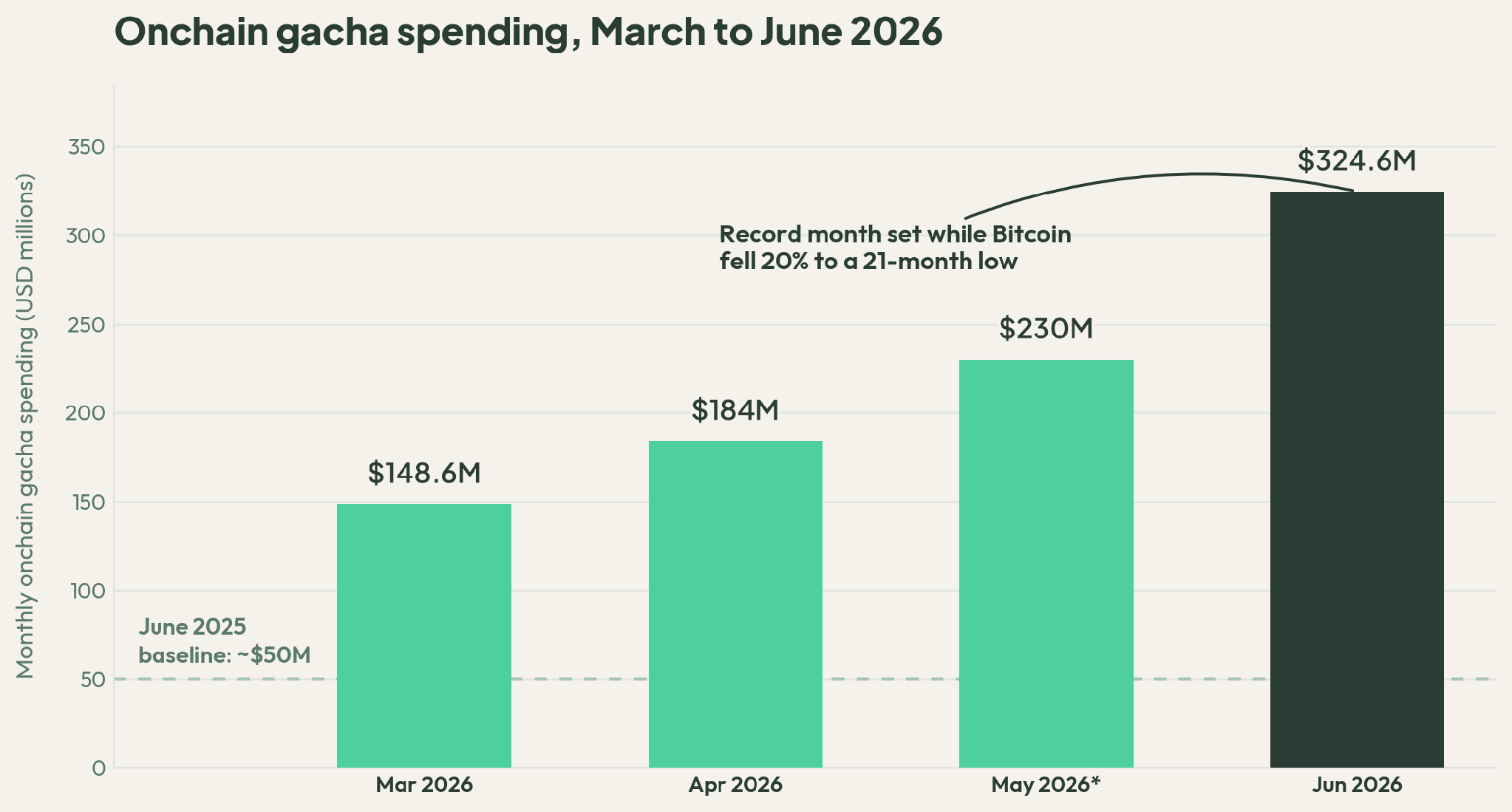
In June 2026, users spent a record $324 million on onchain gacha (think “gotcha”), according to Blockworks Research. A year earlier the figure was closer to $50 million a month.
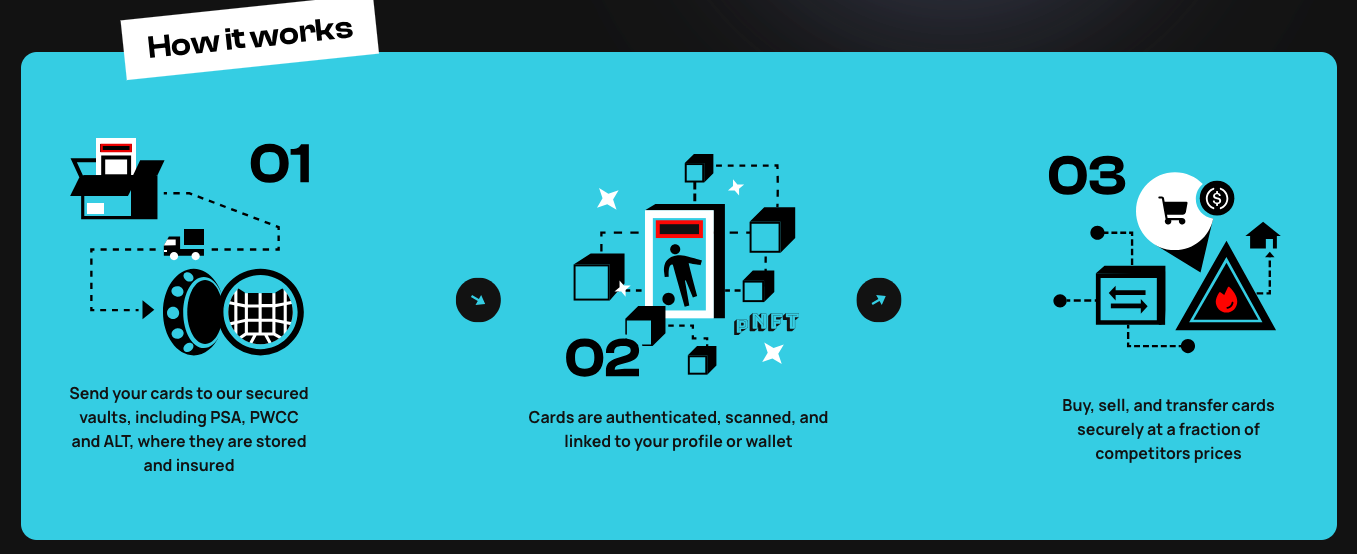
Gacha takes its name from Japanese capsule vending machines. You pay a fixed price for a randomized item. Here the item is a professionally graded card sitting in a vault, represented by a token you can trade, sell back, or redeem for the physical slab.

June was a terrible month for crypto. (yeah, we all know…)
Bitcoin fell more than 20% in June to a 21-month low, and spot Bitcoin ETFs saw record outflows. Onchain collectible spending set an all-time high in the same window.
Demand that grows through a drawdown points to a different buyer than the one selling Bitcoin. Somebody spending $80 on a randomized card pull isn’t taking a position on monetary policy or ETF flows, but buying a shot at a Charizard, with the wallet serving as the checkout lane rather than the reason for the purchase.
That makes this the rare tokenized category whose demand doesn’t track crypto liquidity. What June didn’t test is the harder question, which is what happens when card prices fall instead of coin prices.
This is a Warehouse Receipt
Strip the branding off and this is one of the oldest structures in finance: a warehouse receipt.
Somebody deposits a physical good with a custodian. The custodian issues a paper claim. The claim trades hand to hand while the good never moves. Grain elevators ran on this. The London Metal Exchange still does. It’s why a bar of gold in a Zurich vault can change owners eleven times without anybody touching it.
Every platform here runs the identical workflow: authenticate, vault, tokenize, trade, redeem.
Collector Crypt says it has tokenized more than 130,000 graded cards in insured Delaware facilities and shipped over 12,000 on redemption.
Phygitals lists its tokenized cards inside Fanatics Collect; buyers need no wallet.
Beezie went from Flow to Base to Solana.
Courtyard took the same rails to coins and watches.
In July, Jupiter and Rarible both launched gacha products powered by Collector Crypt, putting vaulted cards in front of millions of existing crypto users.
Warehouse receipts, with a randomizer bolted to the front.
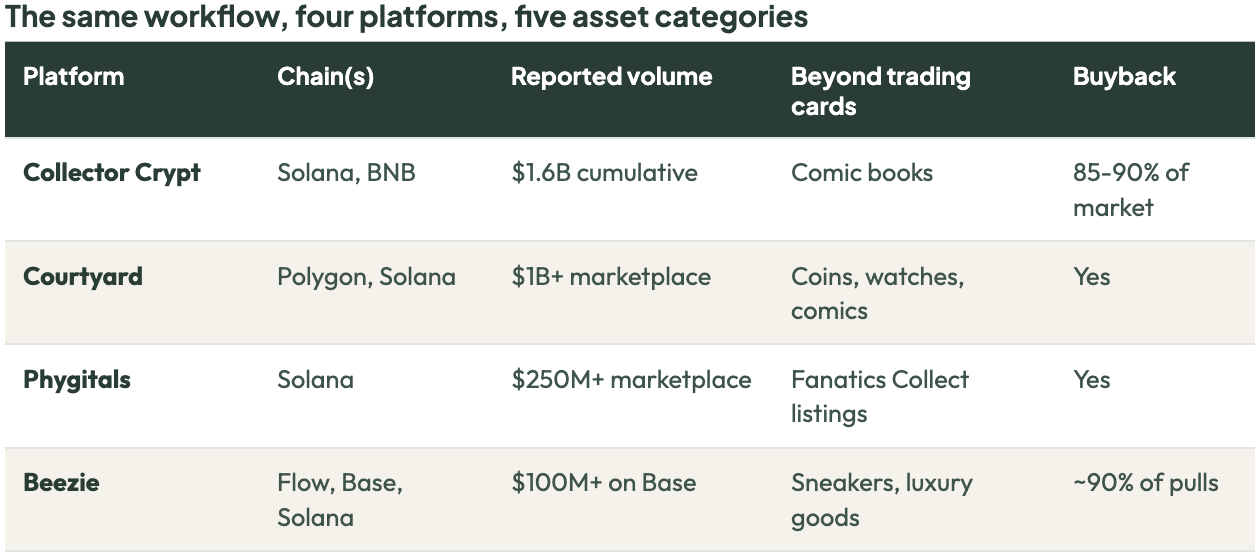
Volume figures are self-reported and measured on different bases, so read each row on its own rather than against the others. The rightmost columns are the point: the same authenticate-vault-tokenize-redeem workflow now runs coins, watches, comics, sneakers, and luxury goods.
The Missing Buyer Problem, Inverted
A few weeks ago I wrote about why tokenized real-world assets keep failing to find allocators. The industry spent five years tokenizing private credit and regional real estate for fiduciaries who can’t operationally buy them. Custody is fragmented, KYC gets rebuilt at every issuer, nothing shows up in portfolio reporting.
The token was fine.
There was just nobody on the other side of it.
Trading cards inverted that completely. The buyers were already there, transacting daily, and required permission from nobody. No compliance department sits between a twenty-eight-year-old and a booster pack.
The friction removed was specific: a PSA 10 Charizard takes weeks to convert to cash on eBay, with 13% fees, shipping risk, and dispute exposure. Onchain it clears in seconds at 85 to 90 cents on the dollar.
That’s less flattering to the tokenization industry than the industry would like. Tokenization doesn’t create a market. It compresses settlement inside one that already exists. Where the buyers were present, it worked. Where they were hypothetical, five years of engineering produced very little.
BUFFETT FRAMEWORK QUESTION
Would I own this if the settlement layer were boring?
If the answer is no, you’re buying the mechanism rather than the asset. A vaulted Charizard is a collectible taxed at the 28% rate with no cash flow, whether or not a token points at it. Circle of competence applies to the thing in the vault, not the chain it settles on.
The Objection That Deserves an Answer
A skeptic would put it this way, and they’d be substantially right.
Tokenization didn’t drive this - the randomizer did. The volume is overwhelmingly pack-opening spend rather than secondary trading of vaulted assets. If $324 million a month circulates against roughly $40 million of tokenized inventory, that ratio describes a casino float more than an asset market. Some of it has been subsidized by token incentives since CARDS launched.
I’d add one more: Whatnot has nothing to do with blockchains, so the $20 billion is evidence of demand for the asset class rather than for the rails.
What’s interesting here is that the narrative claim still survives despite this. Cards get authenticated, vaulted, minted, traded, and redeemed at consumer scale with real physical delivery on the other end. That’s more than most RWA categories have shown after five years and considerably more capital.
The infrastructure found product-market fit before the use case got respectable. That’s usually the order it happens in.
3 Risks the Charts Don’t Show
The slab is the oracle.
Every token here points at a grading company’s opinion. Tokenizing a card verifies the slab, not the card inside it. That would be a footnote if grading were healthy. PSA’s May 2026 fraud report flagged more than $200 million in counterfeits caught at authentication, with Pokemon submissions up 125% year over year. PSA’s own chief executive called a grade-change episode a systematic failure after cards the company bought back at PSA 9 prices reappeared as PSA 10s. Blockchain provenance starts one step too late in this stack.
The buyback bid is a balance sheet.
Instant liquidity at 85 to 90% of market is the feature that makes these platforms feel better than eBay, and it’s funded by the platform’s own inventory. Collector Crypt reportedly owns roughly $23 million of the $40 million vaulted. In a normal tape that’s market making. In a sharp drawdown in card prices, that’s a firm holding depreciating stock while honoring a bid it wrote itself.
The gambling question is open.
Whatnot faces 15 arbitration demands covering more than 30 clients, alleging its randomized breaks constitute an unlawful lottery under California Penal Code 319. Whatnot rejects the characterization and notes that breaks have run at card shops and conventions for generations. Nothing has been ruled on. The onchain versions run a similar mechanic with thinner consumer protections, and Collector Crypt’s chief executive has acknowledged that the product borders on gambling.
The Line That Matters Next
On March 17, 2026, the SEC and CFTC issued a joint interpretation establishing a five-category token taxonomy. Digital collectibles landed in the not-a-security bucket, on the reasoning that their value comes from cultural significance and from supply and demand rather than from the managerial efforts of a promoter.
The caveat is clear: Fractionalized digital collectibles may still be securities, where buyers reasonably expect profits from the efforts of others.
A whole card in a vault with your name on the token is a collectible. One eighty-fourth of a Pikachu Illustrator, marketed on appreciation, with a platform running both the vault and the liquidity, is a different animal wearing the same slab. Fractionalizing is the natural next move for anyone staring at an eight-figure card and a customer base with fifty dollars to spend.
The Bottom Line
The signal that this category has crossed from hobby into product is fractionalization. Watch for any platform offering partial ownership of a single high-value card, or a pooled vault marketed on appreciation. That moves the asset into securities territory under the March interpretation, and it changes who can sell it, who can hold it, and what disclosure comes with it.
Anthony De Angelis pledged warehouse receipts against tanks of salad oil in 1963. The tanks held seawater with a few inches of oil floating on top. American Express had signed the receipts, the stock collapsed, and a young Buffett bought it because the underlying business was fine even though the paper was worthless.
The lesson wasn’t that warehouse receipts are a bad structure. They’re a good one, which is why they’ve survived four centuries. A claim on a physical good is worth what the custodian’s word is worth, and not one dollar more.
Every tokenized card in every Delaware vault is a bet on somebody else’s authentication, made while the largest authenticator in the hobby defends itself in federal court. That bet is priced at approximately zero. The card is the easy part to underwrite. The warehouse is the hard part, and almost nobody is doing that work.
The rails are real.
The receipts are only as good as the warehouse.
Matthew Snider is the founder of Block3 Strategy Group, author of “Warren Buffett in a Web3 World,” and publisher of the BitFinance newsletter. He holds a Series 65 and MBA, and has been an active participant in digital asset markets since 2015. This article is for educational purposes only and should not be considered financial advice. Always consult with a qualified professional before making investment decisions.
SOURCES
CNBC, Fortune, Inc., PYMNTS and Quartz (Whatnot Series G, valuation history, GMV). Blockworks Research and Messari (onchain gacha spending, platform share). Cointelegraph (inventory composition, custodial risk). Solana Foundation, Decrypt and Blockster (platform volumes, category expansion). SEC and CFTC Interpretive Release 33-11412, March 17, 2026. Paul Weiss and Ropes & Gray client memoranda (taxonomy analysis). Baseball America, Sports Illustrated and Value Added Resource (Whatnot arbitration filings and company response). PSA May 2026 fraud report. Value Added Resource (grading litigation).