READ THIS BOOK: The Art of Spending Money
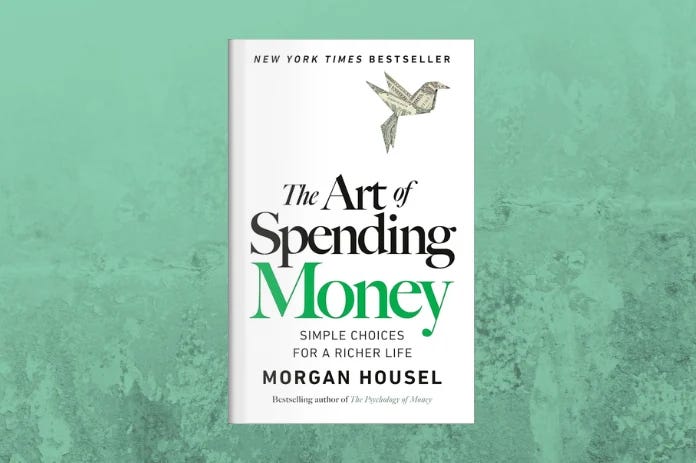
That’s the premise of Morgan Housel’s follow-up to The Psychology of Money. As someone who thinks about wealth constantly, building it, protecting it, growing it, I realized I’d never seriously examined the spending side.
The core insight: Money is a tool, not a yardstick. Most people use it to measure themselves against others rather than to build a life they actually want. The goal isn’t to have money. It’s to have money serve you, and then stop thinking about it.
All Behavior Makes Sense With Enough Information
Most financial behavior is rooted in psychology, not logic. People spend to fill holes, signal status, or process emotions they don’t fully understand. That’s not irrational. It’s human.
As Housel puts it: “People are not rational, but they are rationalizing.”
Personal finance is more personal than it is finance.
There’s no universal formula.
The person buying a $200 bottle of wine and the person putting that $200 into an index fund might both be making the right call for their specific circumstances.
I see this constantly around crypto founders. Spending decisions that look irrational from the outside often make sense once you understand what the person is optimizing for.
The problem is most people haven’t done the honest work of figuring that out.
You Don’t Want Nice Stuff. You Want Attention.
Think you want a nicer car?
A bigger house?
You don’t.
You want respect, admiration, and attention. The stuff is just the vehicle. But the people looking at your car are looking at the car, not you. And even that attention is fleeting.
I’ve watched crypto project teams pour resources into performative brand partnerships and flashy influencer campaigns when the underlying product wasn’t ready. They weren’t building utility. They were buying attention. In this space, attention has a very short half-life.
The projects that endure look boring from the outside. Infrastructure. Governance. Community. The product does the talking.
Housel suggests a brutal exercise: Write down what you want your obituary to say, then live up to it.
No one’s obituary mentions their car’s horsepower.
And no project’s legacy is built on conference parties.
Contentment Is the Cheat Code
Happiness = Reality minus Expectations.
Lower your expectations without lowering your effort, and you’ve found the cheat code.
I wrestle with this as a founder. Building a business requires ambition. But ambition, unchecked, becomes Housel’s treadmill. Your brain doesn’t want nice things. It wants dopamine. The $10K car makes you want the $20K car, which makes you want the $50K car. It never stops unless you step off.

The discipline is in decoupling ambition from contentment. You can work hard and still be satisfied with where you are. But maintaining both at once is a daily practice, not a one-time decision.
Independence Is True Wealth
Housel outlines 15 levels of wealth. The ones that matter:
Level 0: Dependent on strangers. Level 3: You have a job, but your boss owns your day. Level 7: You can say “screw this” and find something better. Level 8: No need to show off to strangers. Level 12: Investments cover basic living expenses for life. Level 14: F-you money. Level 15: Do what you want, with whom you want, for as long as you want.
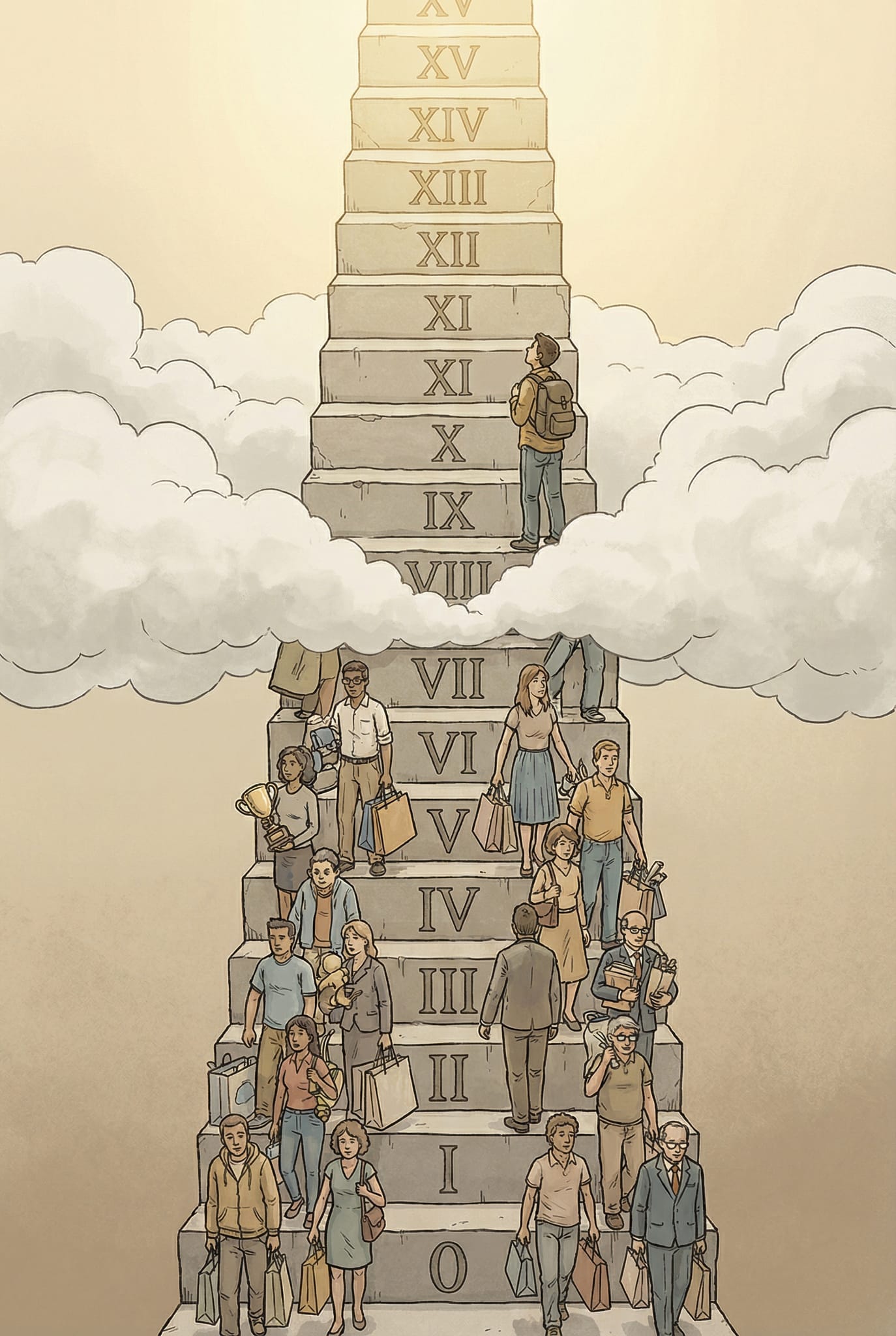
I’d place myself between 11 and 12. Building Block3 has moved me up this ladder, but the gap between 12 and 14 is primarily financial. I know what independence looks like. The question is compounding toward it without forcing the timeline.
This is how I think about money now. Not net worth or account balances, but freedom points. Each smart allocation is a point toward independence. Each reckless one is a point surrendered. The accumulation of freedom points, not the possession of money, is the game.
Wealth without independence is its own form of poverty.
Status Games Can’t Be Won
If you’re buying things for status, you’ve already lost. What makes something high-status is that others don’t have it. The moment they get it, the target moves. The game is designed to keep you chasing.
Housel’s filter: “If my family and I were stranded on an island with no one else around, what would we own?”

On that island, you’d value comfort over appearance. Utility over status. That’s the filter for every purchase.
In crypto, this is amplified. Status signals move faster, cost more, and depreciate quicker than anywhere else. NFT profile pictures, conference VIP passes, “backed by [prestigious fund]” announcements. All bids for attention in a market that forgets you the moment someone makes a louder noise.
The people I respect most in this space passed the island test without knowing it. They built things they’d use even if no one was watching.
Quotes Worth Keeping
“Many a man thinks he is buying pleasure when he is really selling himself a slave to it.” - Benjamin Franklin
“The fastest way to get rich is to go slow.” - Warren Buffett
“Someone will always be getting richer faster than you. This is not a tragedy.” - Charlie Munger
“The best position to be in is rich and anonymous.” - Naval Ravikant
“You’re rich if money you refuse tastes better than the money you accept.” - Nassim Taleb
Applying This
Write your obituary. Spend accordingly.
Run the island test before any major purchase. Would you want this if no one could see it?
Track your independence level. Where are you on the 15-level scale? What moves you up?
Spend extravagantly on what you love. Cut everything else.
Compound memories, not just money. Time with family can’t be recovered.
My Take
The best investors and the best spenders share the same trait. They play their own game.
In crypto, people chase pumps not because they’ve done the analysis, but because they can’t stand watching others get rich faster. That’s the outer scorecard. It’s a recipe for buying tops and selling bottoms.
Buffett’s inner scorecard matters here. So does his 20-punch-card idea: you get a card with only 20 investment decisions for your entire life. If you operated that way, you wouldn’t limp into positions. You’d build a real thesis grounded in fundamentals. When you had conviction, you’d go in hard.
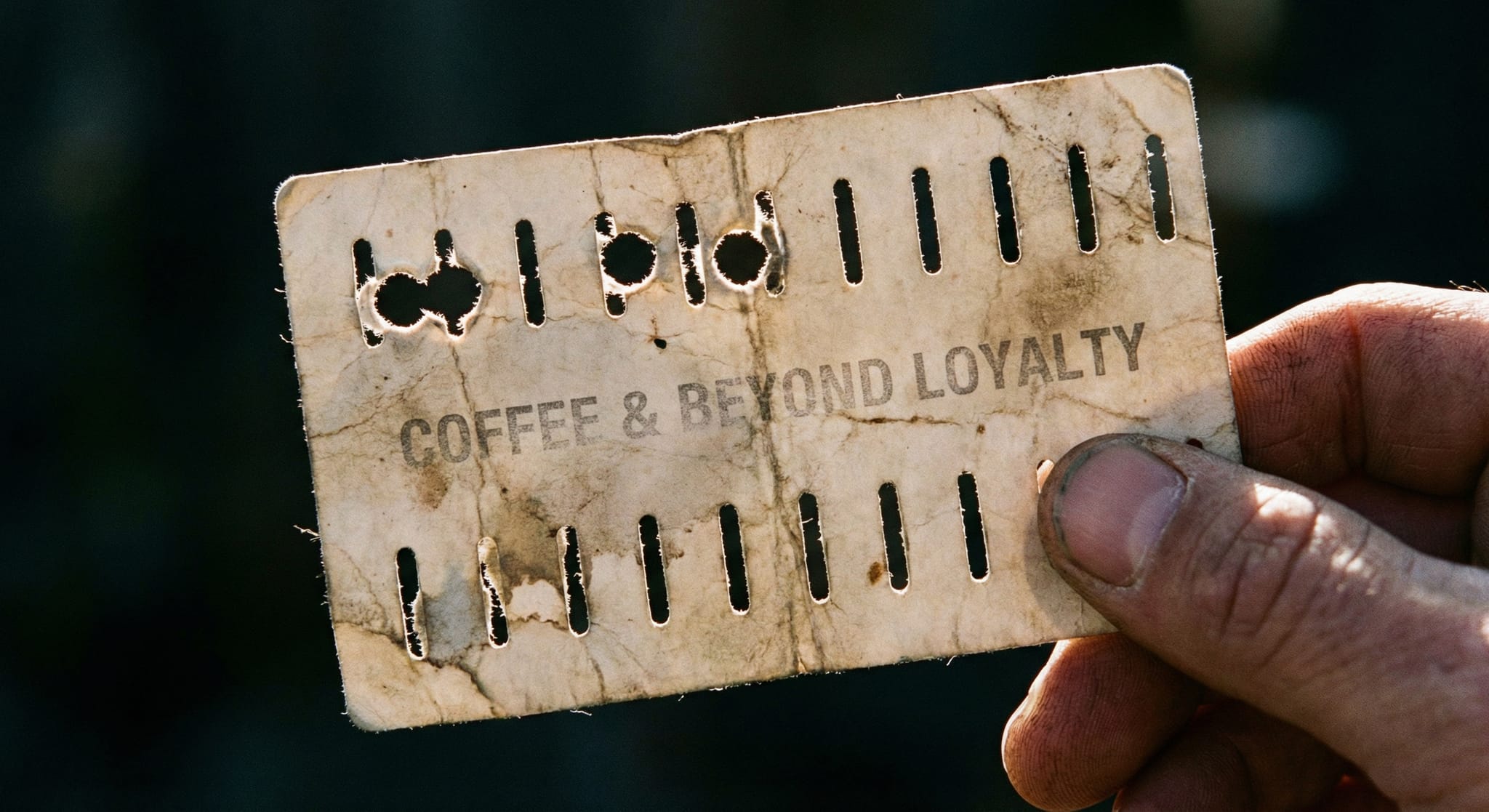
That’s what Housel is saying about spending, too. Be deliberate. Have a thesis for how you use your money, the same way you’d have one for how you invest it. Most people put more thought into Friday dinner reservations than into the financial architecture of their life.
If you’re investing to impress people on Twitter, you’re playing the wrong game. If you’re investing to accumulate freedom points, to reach the level where your calendar belongs to you, you’ll make different decisions. Better ones.
What people really want from money is the ability to stop thinking about money.
If you found this useful, share it with someone who might benefit.
— Matthew
X: @bit_finance_
Want to level up your life?
Read more.
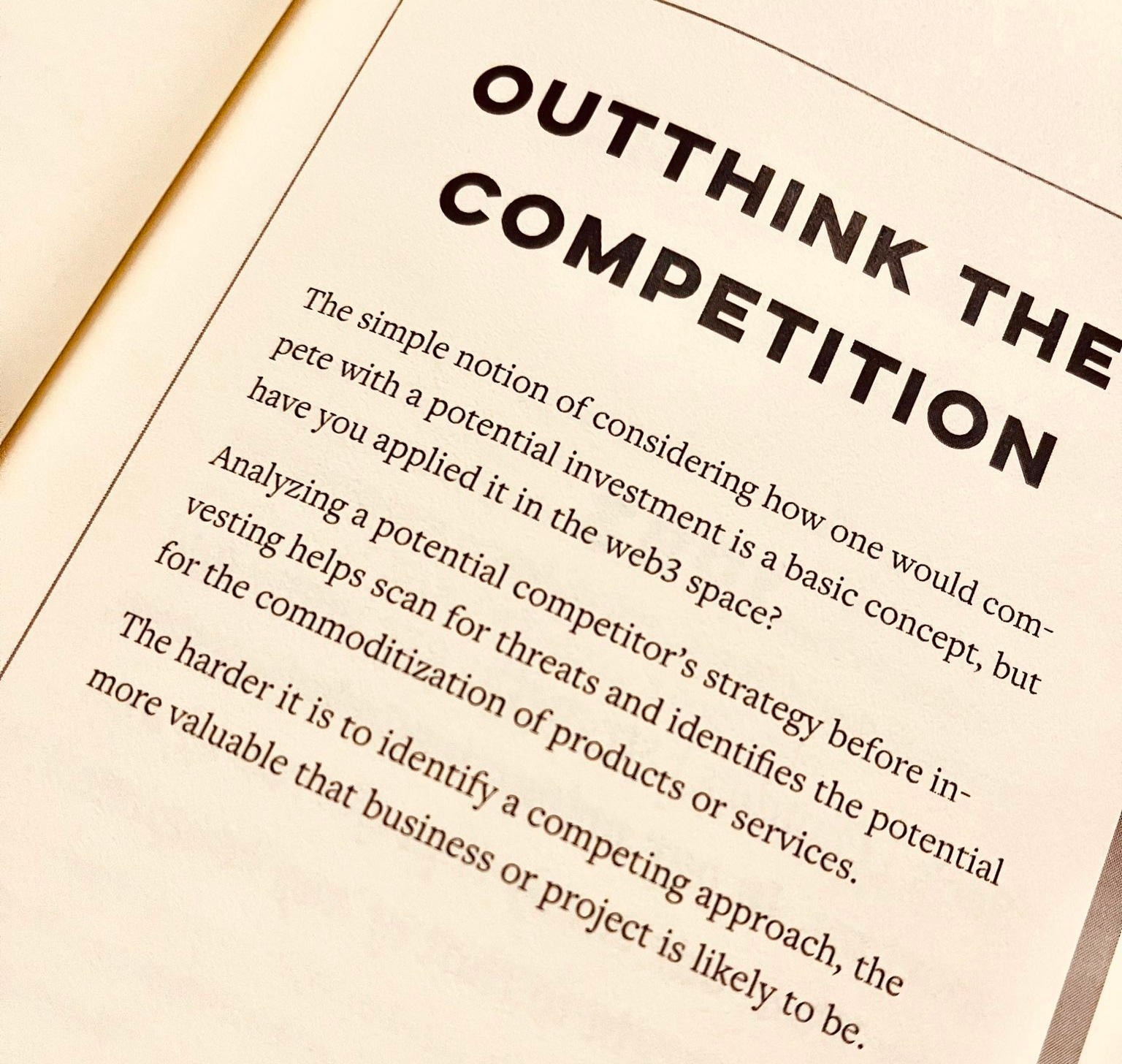
We took 1,300+ pages of wisdom from the Oracle of Omaha and condensed it into a snackable, easy-to-read guide for digital asset investors. Pick up your copy today!