The One-Person Hedge Fund Is Here.

Business Insider published a piece this week that should get the attention of anyone thinking about launching a digital asset fund. It’s aptly titled:
The headline focused on traditional hedge funds launching leaner and faster than ever. I think the substance underneath is personally more interesting than that.

The article profiles Ben Williams, who launched Bayhunt Capital in 2024 as the founder, chief investment officer, and sole employee. The firm manages $360 million through separately managed accounts.
One person.
No back office.
No compliance team sitting down the hall.
Let that sink in. He outsourced all the infrastructure and kept the investment process (his moat).
Five years ago, that setup would have been a non-starter for institutional allocators. Today, it’s becoming the preferred model.
The SMA Shift
Separately managed accounts (SMAs) changed the math for fund launches in ways that most digital asset professionals haven’t fully absorbed yet. The traditional path required raising capital into a commingled vehicle, standing up a full operation, hiring a compliance officer, building or buying a tech stack, and then hoping allocators would survive the due diligence process long enough to write a check.
SMAs compress that timeline dramatically.
The allocator maintains custody and transparency over their own assets. The manager signs an investment management agreement, gains discretion over the account, and starts trading.
SS&C reported that adoption of its cloud-based platform for emerging managers grew more than 25% since 2024, with 70 new firms joining in 2025 alone. A service provider called IIP Services launched in 2024 specifically to offer emerging managers a turnkey operational package for the non-investment aspects of the business.
As one of IIP’s partners described, managers can be up and running with new SMA capital within weeks of signing an agreement. Not months —> Weeks.
Why This Matters for Digital Assets
Here’s the part that caught my attention.
The traditional hedge fund world is solving a problem that digital asset managers are still struggling with: how to attract institutional capital without building a fortress first.
The SMA model is arguably an even better fit for digital assets than it is for equities. Post-FTX, the single biggest objection from institutional allocators is custody risk in commingled vehicles.
They do not want their assets pooled in a structure where a manager controls the keys. An SMA eliminates that concern at the structural level. The allocator maintains custody. The manager has trading discretion but never holds the assets.
The infrastructure to support this is maturing quickly. Fireblocks, Anchorage, and Copper all offer institutional-grade custody and execution that can be configured for SMA structures. The compliance tooling is improving. The prime brokerage layer for digital assets, while still early, is functional enough for systematic and discretionary strategies.
In other words, the same convergence of cloud-based technology, outsourced operations, and allocator preference for transparency that is reshaping traditional hedge fund launches is available to digital asset managers. Most of them just haven’t put the pieces together yet.
The Substack Analogy Holds
The Business Insider piece draws a comparison to how Substack gave writers better tools to self-publish and monetize their work. Portfolio managers incubated inside multistrategy platforms like Citadel and Millennium are now spinning out with institutional pedigree and recreating the tech stack at a fraction of the cost.
I have been thinking about this analogy for a while now, because it maps cleanly to what I see happening with AI-assisted financial tooling.
The barriers to entry for launching a professional investment operation are falling on two fronts simultaneously: the operational infrastructure is becoming rentable, and the analytical and compliance tooling is becoming buildable with AI.
A portfolio manager with a credible track record, a clear investment thesis, and access to the right service providers can now stand up a digital asset SMA practice in a matter of weeks.
That was not true even two years ago.
What You Cannot Rent
The article makes a point worth repeating. Brabus Capital’s founders said it plainly: you can outsource the plumbing, but you cannot outsource knowing whether it is working.
This is the credibility layer, and it remains the highest barrier to entry.
I cannot stress this point enough.
Just because AI proliferates across orgs and employees does not mean that it’s being used meaningfully as a tool or that users are not suffering from the age-old “garbage in; garbage out” biases.
Cheaper technology does not mean launching a fund is fair game for anyone. Allocators are still writing checks based on track record, institutional experience, and operational competence. The outsourced infrastructure makes it possible to start but it sure doesn’t make you qualified.
Buffett would appreciate the distinction.
He’s always argued that a business’s durability comes from its competitive advantages, not its cost structure. The cost structure enables entry. The competitive advantage determines survival.
For digital asset managers, that competitive advantage is going to come from three places: a differentiated investment process, institutional-grade risk management, and the operational credibility to survive due diligence. The technology layer is converging.
The human capital layer is where the separation happens.
EQ > IQ
What I’m Watching…
This article confirms several trends:
The fund formation landscape is bifurcating. On one track, you have the traditional Reg D fund with a PPM, operating agreement, and commingled capital. On the other track, you now have the SMA model, which offers a faster, leaner, and arguably more transparent path to managing institutional capital.
The firms that will capture the most value in the next cycle are the ones that can offer both tracks and help managers choose the right one for their situation.
The service providers mentioned in the article, IIP Services, SS&C, the various prime brokerage platforms, they are building that capability for traditional strategies.
The digital asset equivalent is still fragmented.
That is a gap worth paying attention to.
* * *
The broader lesson here is one Munger has articulated better than anyone:
the world changes, and the people who adapt to the new reality, rather than wishing for the old one, tend to do well.
The one-person hedge fund is not a gimmick. It is the logical outcome of better technology, smarter infrastructure, and an allocator base that increasingly values transparency over tradition.
Digital assets are two to three years behind this curve. The infrastructure is catching up. The question is whether the managers will be ready when it arrives.
Trade carefully out there. Skip the leverage. And if you’re looking for help integrating AI into your advisory practice or building a digital asset framework for clients, you know where to find me.
Until next week.
— Matthew
X: @bit_finance_
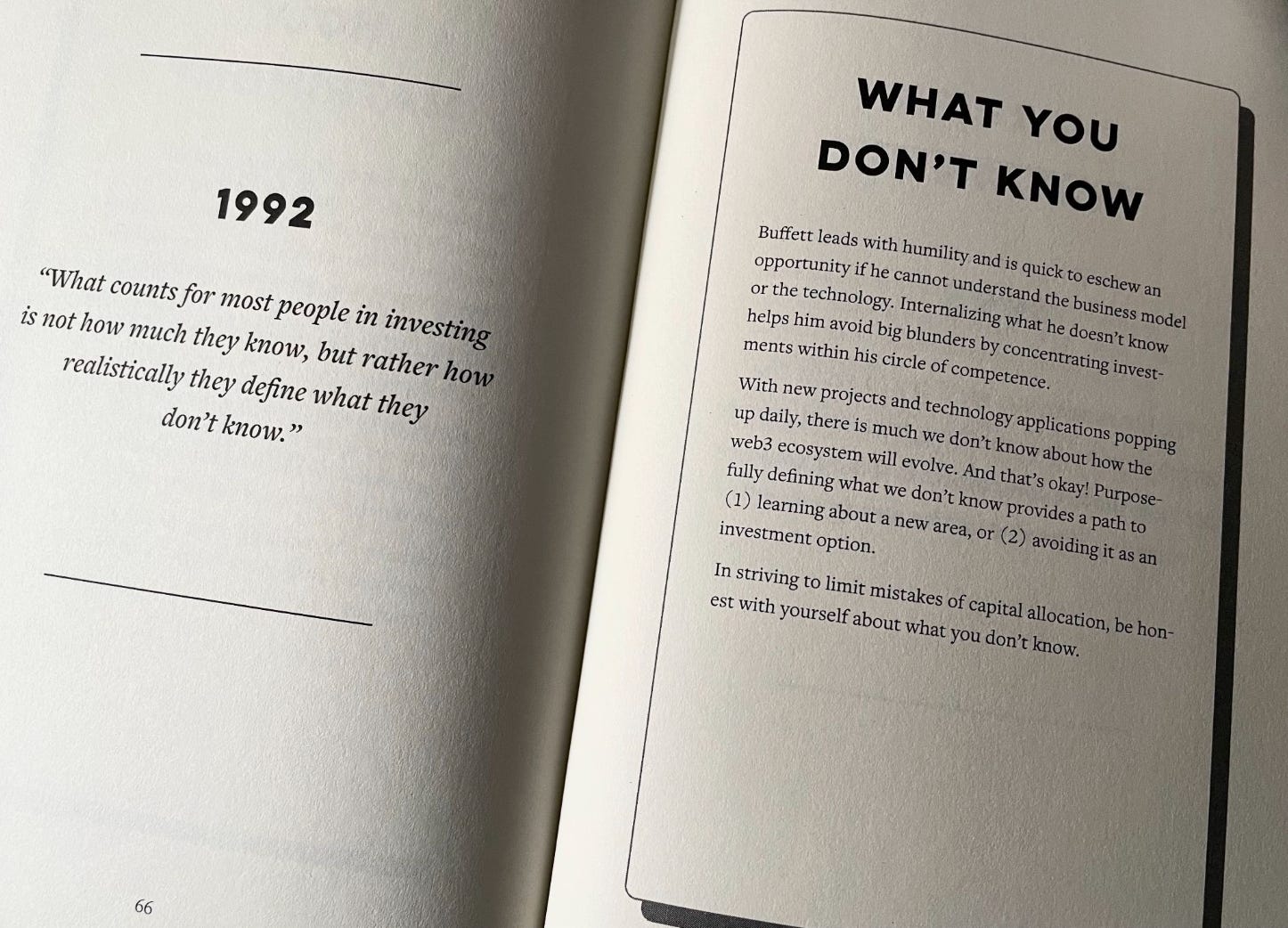
oh! one last thing…if you want to dive deeper into how Buffett’s investing principles applies to digital assets, check out my book.
We took 1,300+ pages of wisdom from the Oracle of Omaha and condensed it into a snackable, easy-to-read guide for digital asset investors. Pick up your copy today!
Matthew Snider is the founder of Block3 Strategy Group, author of “Warren Buffett in a Web3 World,” and publisher of the BitFinance newsletter. He holds a Series 65 and MBA, and has been an active participant in digital asset markets since 2015. This article is for educational purposes only and should not be considered financial advice. Always consult with a qualified professional before making investment decisions.