Two Markets, One Selloff

The crypto market is on fire (and not in the cool way).🔥
Amidst the turmoil however, two things are happening simultaneously:
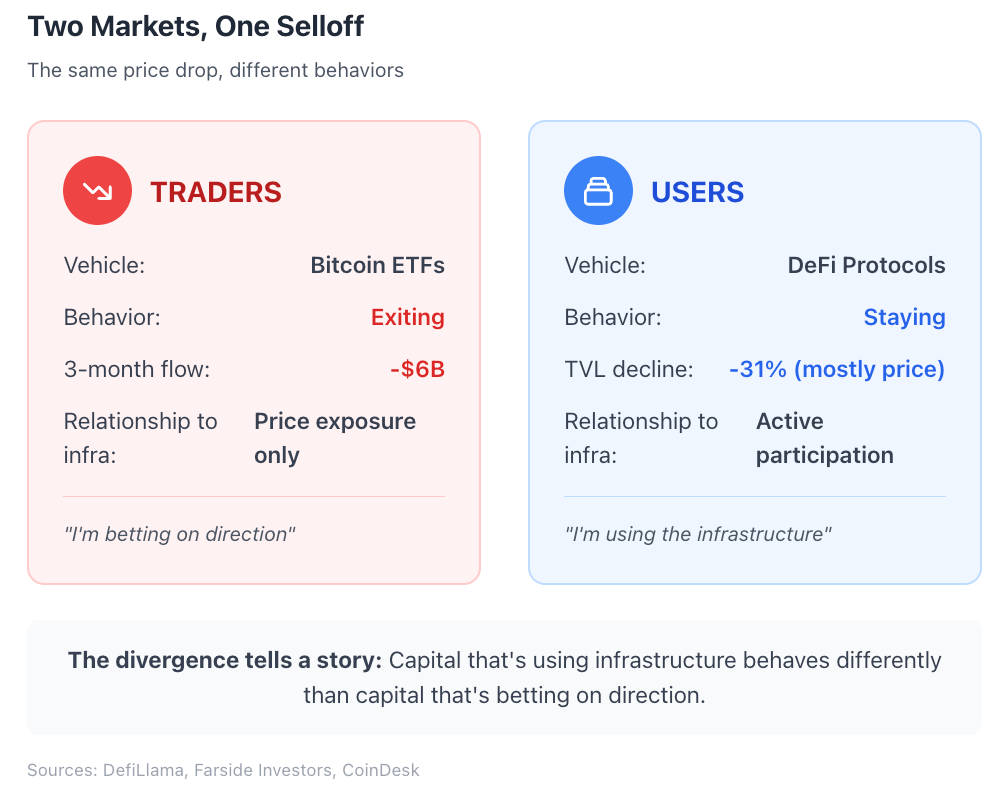
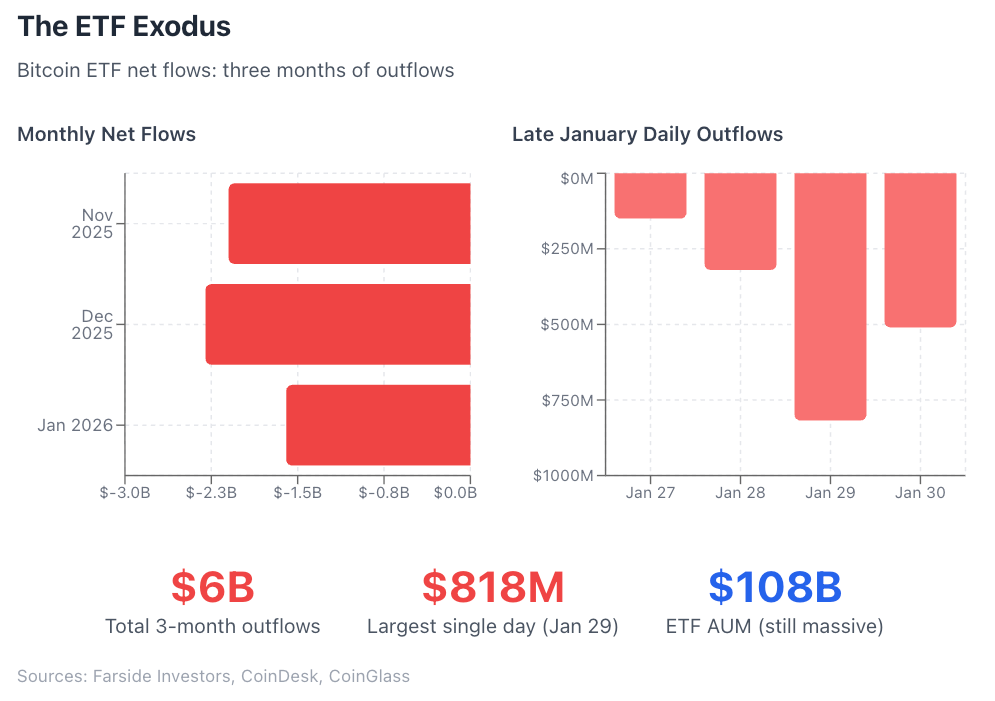
Bitcoin ETFs outflows: $6 billion over three months.
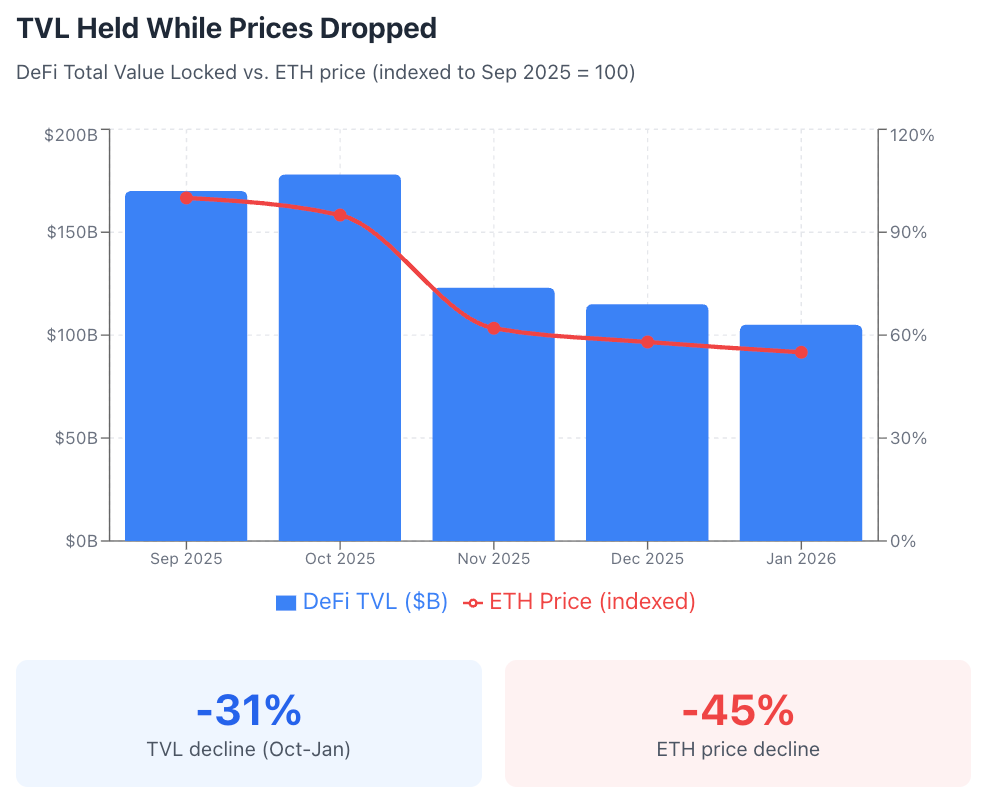
DeFi total value locked: down only 12%, from $120 billion to $105 billion, despite much steeper price declines across the assets themselves.
These numbers tell different stories about different participants. So what gives?
Who’s Actually Leaving
The ETF outflows make headlines because they’re large and legible.
Nearly $1 billion left Bitcoin ETFs in a single day at the end of January and the Fear & Greed Index hit “Extreme Fear” readings.
Just a few short months ago, there was talk about how 2026 was going to be THE year to be in crypto….now it seems the sentiment is deteriorating rapidly.
It’s important to recognize however that ETF holders and DeFi users are not the same population.
ETF capital is, by design, one step removed from the underlying infrastructure.
It’s exposure to price movement. When prices fall, that capital has no reason to stay. It’s not using anything. It’s tracking something.
DeFi capital is different. It’s locked in protocols, earning yield, providing liquidity, collateralizing positions.
It’s capital that showed up to participate in infrastructure, not to bet on direction.
As the drawdowns continue, infrastructure users largely stay.
Speculators are leaving. (good riddance!)
What the 12% Actually Tells Us
A 12% TVL decline during a period of much steeper price drops suggests something worth noticing.
If DeFi capital were purely speculative, it would track price declines more closely.
It didn’t.
Part of this is mechanical.
TVL falls when underlying asset prices fall, even if no one withdraws anything. But that’s exactly the point.
Users aren’t withdrawing at the rate you’d expect if panic were driving decisions.
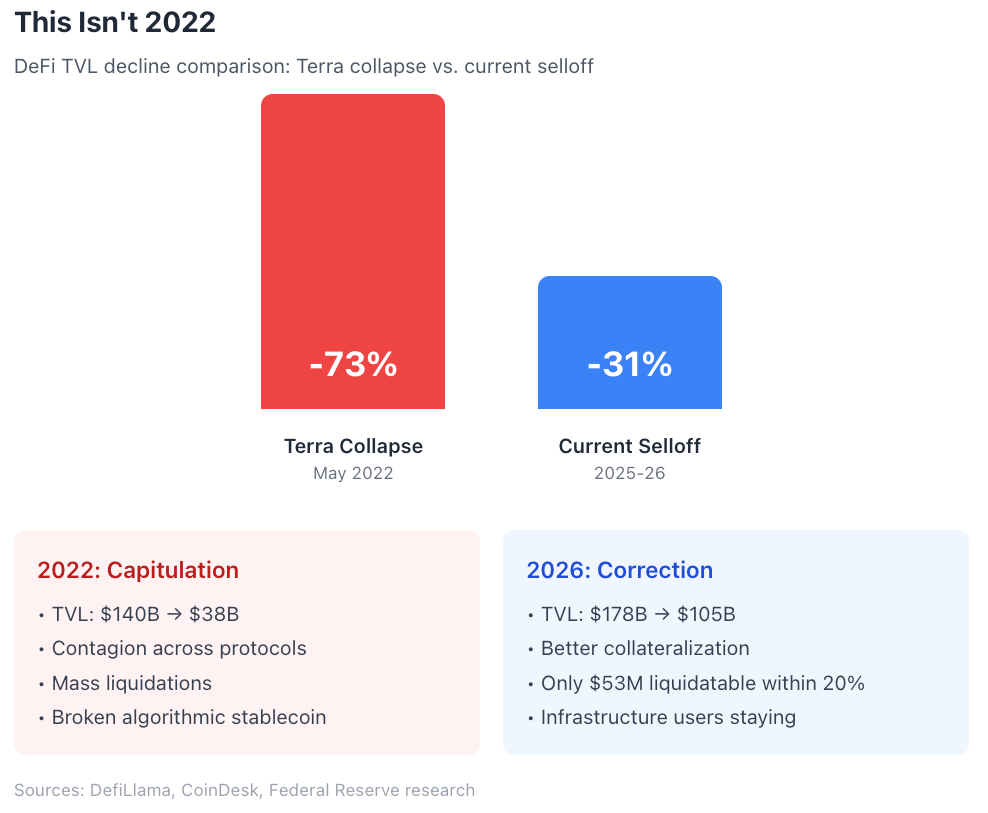
The DeFi market also appears better collateralized than in previous downturns.
According to DefiLlama data, only $53 million in positions are liquidatable within 20% of current prices. Compare this to 2022, when TVL dropped from $142 billion to $52 billion during the Terra collapse contagion. That was capitulation. This isn’t.
The Sentiment Paradox
Here’s the curious part. While the Fear & Greed Index shows fear readings around 29, Santiment’s social media data indicates sentiment is “very positive.” These metrics are measuring different things.
Fear indices capture reactive emotion. Social engagement captures where attention goes. Neither captures what capital actually does.
The most useful signal might be the one that’s hardest to see on social media: what’s locked, what’s earning, what’s not moving.
A Different Question
The default question during a selloff is “should I sell?”
The more interesting question might be: “Am I trading or using?”
Capital that’s using infrastructure behaves differently than capital that’s betting on direction. The ETF outflows and the DeFi stability aren’t contradictory signals. They’re signals from different participants with different relationships to the underlying system.
If you’re tracking price, fear makes sense. If you’re using infrastructure, the calculation changes.
This doesn’t predict what happens next. Prices could fall further.
But the divergence between traders leaving and users staying suggests the panic and the reality may not be measuring the same thing.
What are you actually doing with your position?
Trading it or using it?
The answer might shape how you interpret the noise.
If you found this useful, share it with someone who might benefit.
— Matthew
X: @bit_finance_
Want to level up your life?
Read more.
We took 1,300+ pages of wisdom from the Oracle of Omaha and condensed it into a snackable, easy-to-read guide for digital asset investors. Pick up your copy today!